Better Risk Management in Logistics
This article explores strategies for effective risk management in logistics, highlighting its importance, key concepts, and best practices.
Updated
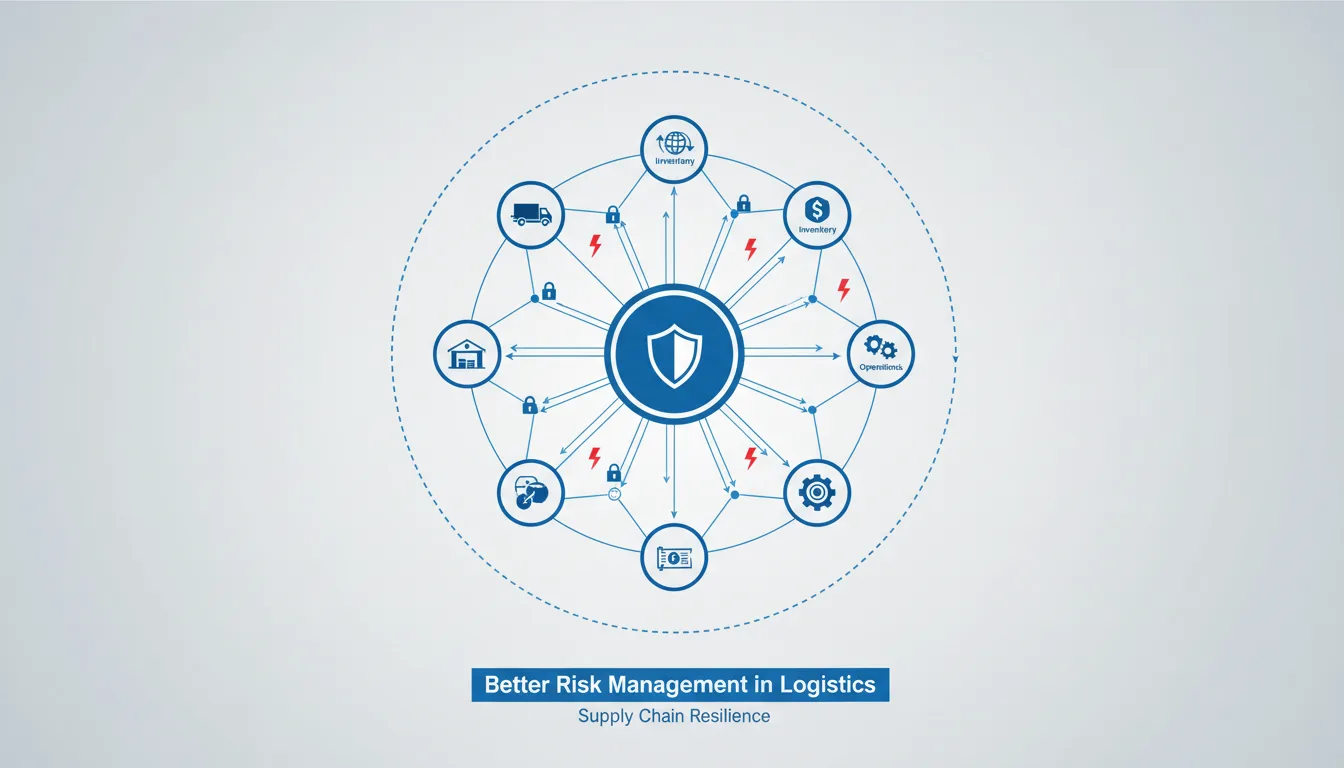
Better Risk Management in Logistics
Overview
Better risk management in logistics refers to the systematic process of identifying, assessing, and mitigating risks associated with supply chain operations. This is crucial for maintaining the efficiency, reliability, and profitability of logistics operations across various sectors. Effective risk management enables organizations to navigate uncertainties, from production disruptions to transportation delays, and reinforces their resilience against unforeseen challenges.
Etymology and Origins
The term 'risk management' originates from the financial sector, where it was first employed in the 1960s. Interestingly, the concept of managing risks can be traced back to ancient civilizations, illustrating how merchants implemented strategies to protect their shipments from theft and spoilage. In particular, historical records show that both the Phoenicians and ancient Romans had protocols for mitigating risks in trade. Over time, as logistics evolved into a distinct discipline within supply chain management, the application of risk management principles expanded, culminating in today's comprehensive frameworks. The evolution of the terminology reflects a broader understanding of risk—shifting from a purely financial context to encompass operational and strategic aspects as logistics environments grew more complex [1].
Historical Development
The evolution of risk management in logistics can be outlined through several key milestones:
- 1960s: The formal introduction of risk management practices in finance influences logistics operations, starting with corporations and banks adopting models to mitigate financial risks.
- 1970s: The concept of total quality management emerges, emphasizing the importance of risk assessment in operational processes.
- 1985: The Committee of Sponsoring Organizations of the Treadway Commission (COSO) publishes its Internal Control—Integrated Framework, fostering a structured approach to risk management in organizations, including logistics.
- 1990s: The emergence of Supply Chain Management (SCM) leads to the integration of risk management into logistics practices, driven by pioneers like Dr. Hau Lee, who introduced concepts such as the Triple-A Supply Chain model focused on agility, adaptability, and alignment.
- 2005 and beyond: Technological advancements, such as the adoption of RFID and integrated logistics platforms, enhance real-time risk management capabilities. The rise of technology frameworks, including ISO 31000 in 2009, provides guidelines on risk management applicable across logistics and beyond. Key events, such as the 2011 Japanese earthquake and tsunami, also highlighted vulnerabilities and the need for more resilient supply chains [2].
Core Concepts
Effective risk management comprises several core concepts, including:
- Risk Identification: Recognizing potential risks within the logistics process, including operational, financial, and compliance-related risks. Techniques such as SWOT analysis and failure mode effects analysis (FMEA) are commonly employed.
- Risk Assessment: Evaluating the likelihood and potential impact of identified risks. This involves analyzing historical data and scenario modeling to gauge vulnerability levels.
- Risk Mitigation: Implementing strategies to minimize the impact of risks. Common practices include adopting safety stock strategies, diversifying suppliers, and conducting regular training for employees.
- Continuous Monitoring: Regularly reviewing and updating risk management plans to adapt to changing environments and emerging threats, informed by principles of Kaizen, which advocates for continuous improvement.
Types and Classifications
Risk management in logistics can be classified into several categories:
- Operational Risks: Arising from day-to-day logistics operations, such as equipment failure and workforce disruptions. Techniques like cycle counting can help mitigate these risks.
- Supply Chain Risks: Risk factors related to suppliers, including financial stability and geopolitical issues. Companies often utilize supplier audits and performance metrics to monitor these risks, as seen in the practices of leading companies like Walmart and Apple.
- Financial Risks: Fluctuations in currency rates or fuel prices that affect logistics budgets. Organizations can hedge against such risks through financial instruments and fixed contracts, informed by historical trends in oil prices and transportation costs.
- Regulatory Risks: Compliance failures can lead to legal penalties; therefore, staying informed about regulations—such as recent changes in trade policies or environmental regulations—is critical for risk management [3].
Industry Applications
Better risk management strategies are applicable across multiple sectors:
- Retail: With increasing global trade, retailers implement risk management systems to prevent stockouts and manage inventory efficiently, as demonstrated by Target's multi-supplier strategy.
- Pharmaceuticals: Due to strict regulation, pharmaceutical companies employ risk management to ensure compliance with safety standards and secure supply chains, illustrated by the practices of Pfizer, especially during vaccine distribution efforts.
- Manufacturing: Manufacturers use risk assessment tools to protect against supply disruptions that can hinder production schedules, exemplified by Toyota's robust supply chain resilience strategies following the 2011 earthquake.
Benefits and Advantages
The advantages of effective logistics risk management include:
- Improved Resilience: Organizations are better equipped to handle disruptions, enhancing overall operational resilience.
- Cost Savings: Reducing the frequency and impact of disruptions leads to cost reductions in operations and insurance, as substantiated by case studies showing up to a 20% reduction in operational costs through effective risk policies [4].
- Increased Customer Satisfaction: More reliable service and timely deliveries improve customer trust and satisfaction.
Challenges and Limitations
Despite its benefits, implementing risk management in logistics presents several challenges:
- Complexity of Supply Chains: The intricate nature of global supply chains makes comprehensive risk management challenging. This complexity has grown exponentially with the rise of e-commerce.
- Data Overload: Organizations may struggle to analyze large sets of data effectively to identify potential risks, exacerbated by a lack of robust analytical tools.
- Change Resistance: Employees may be resistant to changes in procedures or technologies that improve risk management, hindering implementation efforts.
Best Practices
To enhance risk management in logistics, organizations should consider the following best practices:
- Regular Training: Staff should undergo training to stay updated on risk management tools and techniques.
- Cross-Functional Collaboration: Risk management should involve different departments, including procurement, operations, and finance, to gain a holistic view of risks.
- Adoption of Technology: Utilizing robust warehouse management systems (WMS) and data analytics software can enable better risk tracking and management.
Future Trends
Looking ahead, several trends are likely to shape risk management in logistics:
- Increased Automation: Automation technologies will streamline risk management processes, improving efficiency and response times, as evidenced by early adopters leveraging robotic systems.
- Enhanced Data Analytics: The use of big data and AI for predictive analytics will allow organizations to anticipate risks more effectively, supporting proactive decision-making.
- Supply Chain Transparency: Greater visibility into the supply chain will lead to improved risk assessment capabilities, fostering strong supplier partnerships. Initiatives like blockchain are expected to play a pivotal role in enhancing transparency and trust in supply chains [5].
Related Concepts
Understanding better risk management in logistics is essential due to its interconnectedness with various logistics and supply chain concepts, such as inventory management, order fulfillment, and supply chain agility. By implementing a robust risk management framework, companies can optimize their logistics operations while addressing potential risks proactively.
Sources
- Mobile Warehouse Management System Overview
- Stock Replenishment Guide
- Cycle Counting Guide
- Risk Management Strategies and Organizational Performance - A Study of Manufacturing Companies in Nigeria
- How Blockchain Technology is Improving Supply Chain Risk Management
- History and Evolution of Risk Management in Logistics
- The Ripple Effect: How Supply Chain Issues Affect Your Business