Better Resource Management in Logistics
Explore better resource management in logistics through optimized processes, technologies, and best practices to enhance efficiency and reduce costs.
Updated
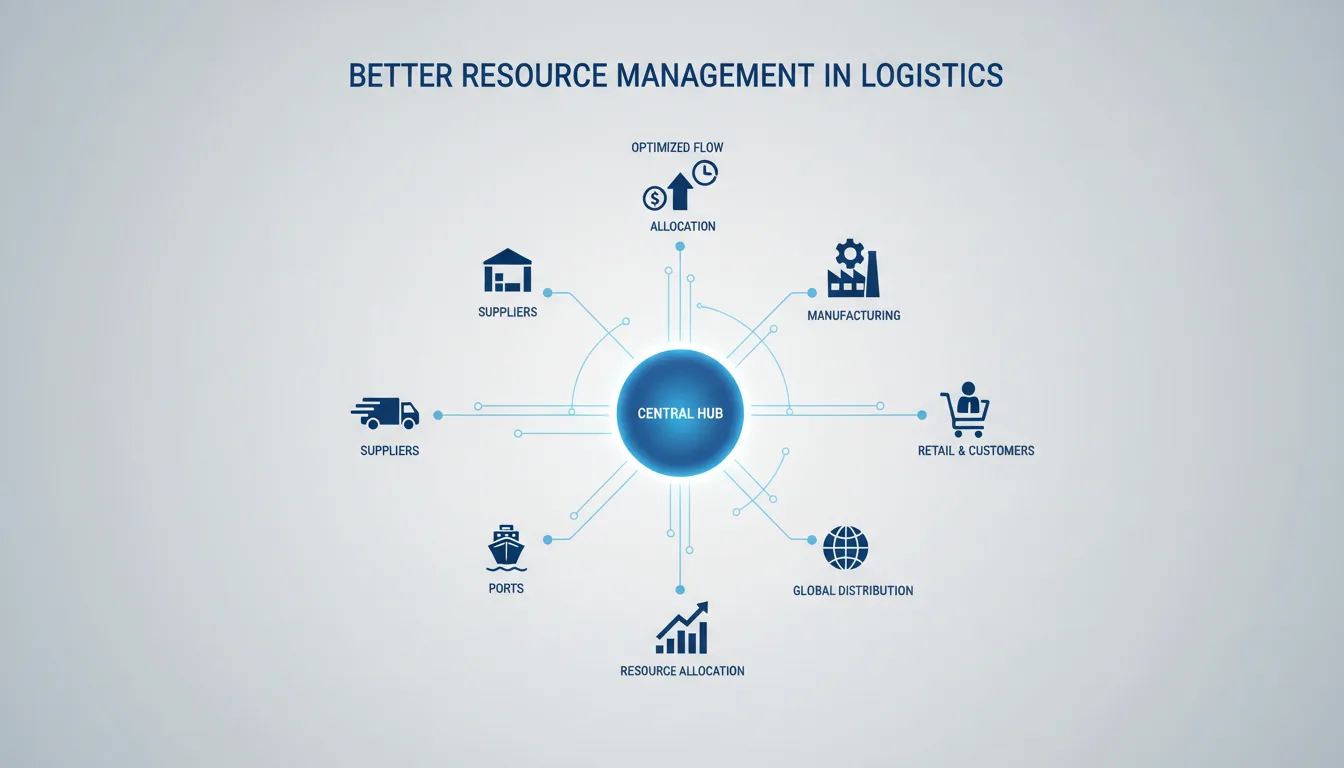
Better Resource Management in Logistics
Overview
Better resource management in logistics refers to the systematic strategy of optimizing resources—such as time, inventory, labor, and technology—to enhance operational efficiency, reduce costs, and improve service levels. In the logistics sector, effective resource management is vital to ensuring smooth operations and maintaining competitiveness in the supply chain environment. As the logistics landscape grows increasingly complex, driven by globalization and e-commerce demands, organizations must optimize their resources—including inventory, labor, space, equipment, and information technology—enabling them to respond to customer needs with speed, accuracy, and profitability.
Etymology and Origins
The term "logistics" has ancient roots, deriving from the Greek word "logistikos", meaning "skilled in calculating" or "accountant." Its modern usage is often traced to military applications, where it referred to the art of moving and quartering troops and supplies. The French term "logistique" emerged in the 17th century, further solidifying its association with military supply chains, famously detailed by Baron Antoine-Henri Jomini in the early 19th century.
The concept of "resource management" as a distinct business discipline gained prominence in the mid-20th century with the rise of operations research and scientific management principles. While the practice of managing resources is as old as organized human activity, the formal integration of "resource management" with "logistics" became crucial as supply chains grew in complexity post-World War II. This combination signifies the strategic allocation and optimization of all assets—physical, human, and informational—required to execute logistical operations effectively.
Historical Development
Effective resource management in logistics has evolved significantly alongside the expansion of global commerce and technological advancements:
-
Ancient Roots: Early examples of sophisticated resource management in logistics can be found in ancient empires like Rome, where the ability to supply legions across vast territories was critical to military success and expansion. This complex process involved meticulous planning of routes, effectively managing provisions, and coordinating transport, even in the absence of modern terminology.
-
Industrial Revolution & Early 20th Century: The Industrial Revolution brought about mass production, significantly increasing the demand for efficient raw material sourcing and finished goods distribution. Early 20th-century pioneers like Frederick Winslow Taylor introduced scientific management principles, emphasizing the optimization of factory processes and labor, thereby laying the groundwork for future logistical resource optimization.
-
Post-WWII & Operations Research: The 1940s and 1950s marked the formal emergence of operations research, heavily influenced by the complexities of wartime logistics. This era introduced mathematical and analytical methods to optimize complex systems, which had a profound impact on inventory control, transportation scheduling, and facility location decisions. Companies like DuPont pioneered advanced inventory management techniques that reshaped the industry's approach to resource allocation.
-
1960s-1980s: Integrated Logistics and MRP: The concepts of Integrated Logistics and Material Requirements Planning (MRP) emerged to streamline processes. The 1970s saw the advent of Just in Time (JIT) inventory systems, exemplified by the Toyota Production System, which revolutionized resource management by minimizing waste and reducing inventory costs. The 1980s introduced technologies like barcoding, transforming inventory tracking.
In summary, better resource management in logistics is a crucial endeavor shaped by historical developments, from its military roots to its current technological sophistication. As logistics continues to evolve, the sophisticated tools and methodologies that enhance resource management remain paramount for achieving operational excellence in today’s competitive landscape.
Sources
- Mobile Warehouse Management System
- Order Management System
- Logistics - Wikipedia
- The Evolution of Resource Management as a Field of Study
- The Roman Army - World History Encyclopedia
- Material Requirements Planning (MRP) - APICS
- Automated Purchase Quantity
- Warehouse Layout Preview
- Bin Packing Visualizer
- Bin Put-Away Criteria
- Batch Picking Guide
- Cycle Counting Guide
- The Industrial Revolution - Britannica
- Frederick Winslow Taylor - Taylorism.org
- Operations Research - ScienceDirect
- Just In Time (JIT) Inventory System
- Supply Chain Management (SCM) - CIPS
- Transportation Management Systems (TMS) Technology Guide - Inbound Logistics
- The Foundations of Operational Art and the Operational Level of War - JSTOR
- Antoine-Henri, baron Jomini - Britannica
- History of Logistics