Automated Storage Systems
Automated storage systems enhance inventory management through technology, increasing efficiency in logistics and supply chain operations.
Updated
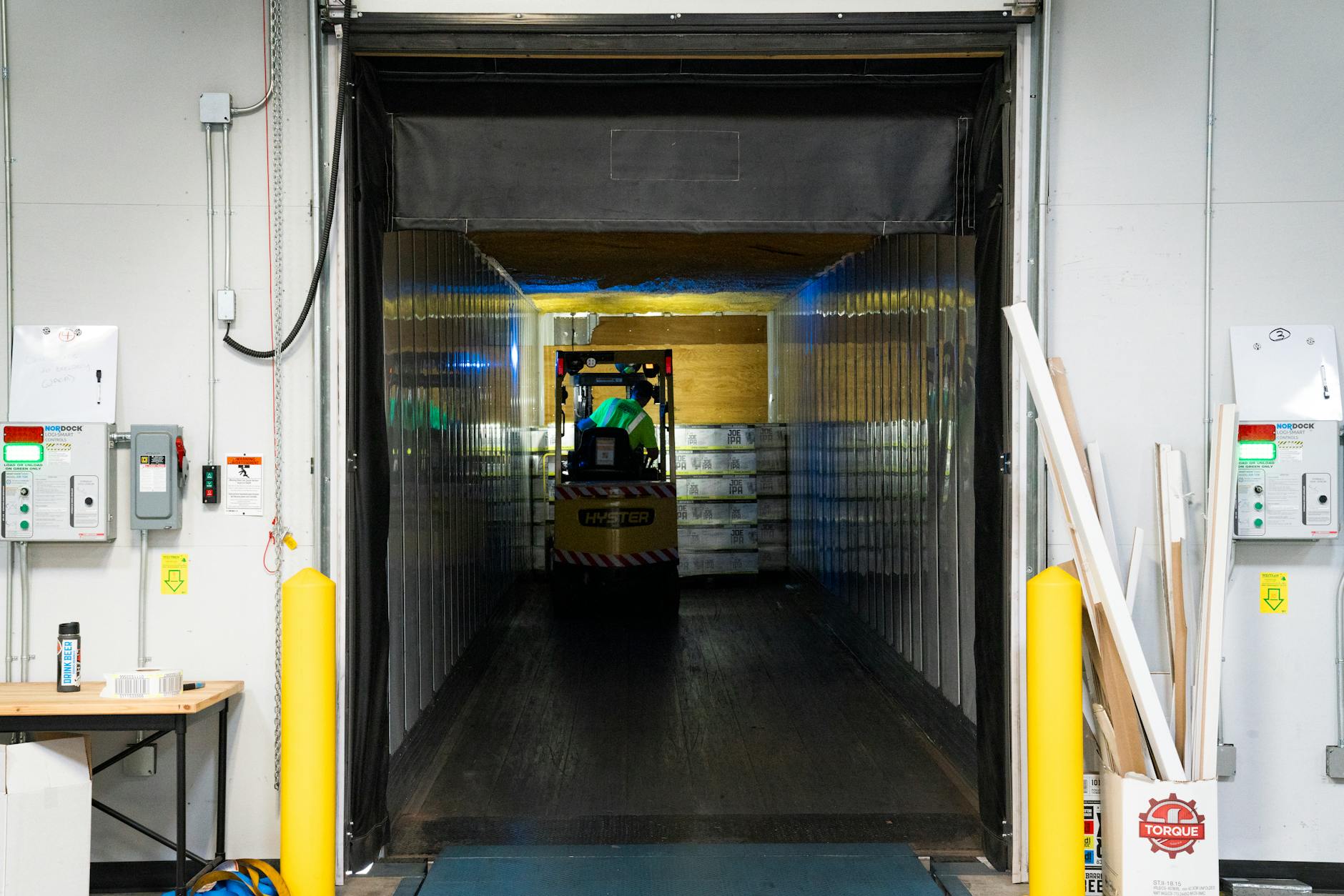
Overview
Automated storage systems (ASS) are advanced storage and retrieval systems that utilize various automated technologies to manage inventory with minimal human intervention. These systems are designed to improve storage density, enhance retrieval speed, and reduce operational costs by automating the handling, storing, and retrieving of goods. Modern industries leverage ASS to optimize their supply chain operations, responding quickly to market changes and customer demands, ultimately facilitating efficient order fulfillment and improving overall warehouse throughput.
Etymology and Origins
The concept of automated storage has deep roots in the evolution of materials handling. While the term "automated storage" gained prominence in the late 20th century, its origins can be traced much further back. Early forms of mechanized storage emerged during the Industrial Revolution, with the introduction of mechanical devices such as conveyors, hoists, and cranes designed to move goods more efficiently within factories and warehouses. These early innovations aimed to reduce manual labor and increase throughput.
The specific term "Automated Storage and Retrieval System" (AS/RS), often used interchangeably with ASS, first appeared in literature and industry discussions around the [1960s](https://www.materials handling.org/assets/mhi_materials_handling_white_paper_2016.pdf), as advancements in computer and control technology made fully integrated, unattended operations feasible. The linguistic roots reflect a clear progression: from manual storage to mechanized storage (using machines) to automated storage (machines controlled by logic). This period marked a significant shift from simple mechanization to systems capable of making decisions and executing tasks without constant human direction, heralding a new era in inventory management practices.
Historical Development
The evolution of Automated Storage Systems is a testament to the continuous drive for efficiency and cost reduction in logistics and manufacturing:
-
Pre-1950s: Manual and Mechanized Foundations
Before true automation, warehouses relied on manual labor supplemented by basic materials handling equipment like forklifts, hand trucks, and simple conveyor belts. High-bay warehouses with narrow aisles, designed for maximizing vertical space, began to emerge, but retrieval was still primarily human-driven, often using specialized forklift attachments requiring skilled operators. -
1960s: The Dawn of AS/RS
The true genesis of AS/RS occurred in the 1960s with the development of the first computer-controlled automatic storage and retrieval systems. These pioneering systems, often large-scale unit-load AS/RS handling entire pallets, were integrated with early mainframe computers. This integration allowed for automated tracking of inventory locations and directed storage/retrieval operations, laying the groundwork for future innovations. Companies like Mannesmann Demag (now Dematic) were among the early innovators in this space, focusing on heavy industrial applications and automotive parts storage to improve throughput and accuracy. -
1970s: Expansion and Diversification
The 1970s saw the emergence of smaller, more flexible AS/RS, such as mini-load AS/RS for handling individual totes or cartons, driven by the advent of minicomputers which provided more cost-effective control. This decade also witnessed the growing adoption of AS/RS in a wider range of industries beyond heavy manufacturing, including pharmaceuticals and distribution centers, responding to the increasing complexity of supply chains and the need for faster order processing in a developing global economy. -
1980s: Just-in-Time (JIT) and Robotic Handling
The influence of Japanese manufacturing philosophies, particularly Just-in-Time (JIT) production, created a significant demand for highly efficient and precise inventory management. This led to increased investment in automated systems. The introduction of more sophisticated robotic handling systems and Automated Guided Vehicles (AGVs) further enhanced storage capabilities, allowing warehouses to utilize space more efficiently, improve material flow, and reduce reliance on manual labor. The integration of these systems became crucial for optimizing manufacturing processes. -
1990s: WMS Integration and Barcode Standardization
The proliferation of personal computers and advancements in networking led to the maturation of Warehouse Management Systems (WMS). The integration of WMS with AS/RS became standard, providing real-time inventory tracking, optimized putaway and retrieval strategies, and more precise control over stock levels. The widespread adoption of barcode technology streamlined inventory identification and reduced data entry errors, further solidifying the foundation for fully automated operations. -
2000s: E-commerce Boom and RFID
The explosive growth of e-commerce created unprecedented demands for speed and accuracy in order fulfillment. This era saw the proliferation of RFID (Radio-Frequency Identification) technology, enabling automatic and touchless inventory tracking, significantly reducing errors and increasing speed in storage and retrieval processes. The internet also facilitated more distributed and responsive supply chain networks, driving the need for highly adaptable automation solutions to manage increasing SKU counts. -
2010s and beyond: AI, Machine Learning, and Robotics Innovation
This period is characterized by exponential advancements in robotics, artificial intelligence (AI), and machine learning. Companies like Kiva Systems (acquired by Amazon and now Amazon Robotics) revolutionized warehouse logistics with their mobile robotic solutions for goods-to-person order fulfillment. Other key players like Vanderlande and Dematic continued to innovate with advanced automated sorting systems, multi-shuttle AS/RS, and vertical lift modules (VLMs). The integration of AI and machine learning has driven further transformations, enabling systems to optimize storage layouts, predict inventory needs based on historical data, perform predictive maintenance, and dynamically adjust to demand fluctuations for maximum efficiency.
Core Concepts
Automated storage systems operate on several key principles that drive their effectiveness:
- Storage Density: By employing vertical storage solutions like high-bay racking, automated pallet shuttles, vertical carousels, and vertical lift modules (VLMs), ASS maximizes the utilization of available floor space. This is critical for businesses operating in areas with high real estate costs, allowing them to store significantly more products within a smaller footprint and optimize their warehouse layout.
- Automated Storage and Retrieval: This is the fundamental operation. Using various technologies such as robotic arms, autonomous mobile robots (AMRs), AS/RS shuttles, stacker cranes, and carousels, these systems can efficiently store items into designated locations and retrieve them precisely when needed. This eliminates manual searching and travel time, drastically increasing throughput.
- Integration with WMS: Most automated systems are seamlessly tied to a comprehensive Warehouse Management System (WMS). The WMS acts as the brain, orchestrating the ASS components, directing putaway and retrieval tasks, managing inventory locations, and ensuring streamlined operations and real-time data tracking. This integration is crucial for maximizing the benefits of automation.
- Data Management and Optimization: Digital systems rigorously track inventory levels, locations, and movements. This real-time data ensures that replenishment is timely and accurate, helps businesses decrease overstock and stockouts through precise forecasting, and enables sophisticated optimization using automated algorithms. A visual inventory management system can further enhance visibility and control over these processes.
- Goods-to-Person (G2P) Principle: Many modern ASS, especially those utilizing mobile robots or shuttles, follow a goods-to-person principle. Instead of workers moving to pick items, the automated system brings the required items directly to a picking station. This significantly reduces travel time, improves picking accuracy, and increases overall picker productivity.
Industry Applications
Automated storage systems are utilized across a diverse range of sectors, providing tailored solutions for specific industry needs:
- E-commerce and Retail: Companies like Amazon famously employ massive automated solutions, including Kiva robots and multi-shuttle systems, to quickly fulfill vast volumes of orders with high precision. These systems are essential for handling peak demands, managing a wide array of SKUs, and ensuring rapid shipping crucial for customer satisfaction in competitive online retail environments.
- Pharmaceuticals and Healthcare: In this sector, ASS ensures fast, secure, and compliant retrieval of medication, medical devices, and samples. Automated systems help adhere to strict regulatory requirements like lot tracking and expiration date management, maintaining cold chain integrity, and preventing errors in high-stakes environments. They are also vital for hospitals and pharmacies to manage inventory and dispense medications efficiently.
- Manufacturing and Automotive: Industries benefit significantly from enhanced inventory control for raw materials, components, and work-in-progress (WIP). Automated systems ensure that parts and materials are available precisely when needed for production lines (JIT), facilitating efficient kitting operations and reducing production downtime. Automotive manufacturers use AS/RS for storing vehicle components and spare parts.
- Food & Beverage: Automated cold storage solutions are critical for perishable goods, maintaining precise temperature controls while ensuring rapid throughput. ASS helps manage product rotation (FIFO/FEFO), reduces waste, and handles high volumes of diverse products from production to distribution.
Benefits and Advantages
Automated Storage Systems offer compelling advantages that drive their widespread adoption:
- Enhanced Efficiency and Throughput: By automating repetitive tasks, ASS significantly reduces processing times for storage and retrieval, often increasing throughput by 2-5 times compared to manual operations. This leads to faster order fulfillment and improved overall operational velocity.
- Superior Space Utilization: ASS can increase storage density by up to 85% compared to conventional shelving, particularly with vertical systems. This maximizes cubic space, allowing facilities to store more products in a smaller footprint or defer costly warehouse expansions.
- Improved Accuracy and Reduced Errors: Automation virtually eliminates human error in picking, putaway, and inventory counts. Accuracy rates can exceed 99.9%, leading to fewer mispicks, reduced returns, and more reliable inventory records.
- Reduced Labor Costs and Dependency: While requiring an initial investment, ASS can significantly reduce reliance on manual labor for material handling tasks, lowering ongoing labor costs and mitigating challenges associated with labor shortages and rising wages. Staff can be reallocated to higher-value tasks.
- Enhanced Ergonomics and Safety: By automating the movement of heavy or bulky items, ASS reduces the risk of workplace injuries and improves the overall safety of the warehouse environment, leading to fewer accidents and higher employee morale.
- Better Inventory Control and Visibility: Real-time data collection provides granular visibility into inventory levels and locations, enabling more accurate forecasting, optimized stock replenishment, and minimized stockouts or overstock situations.
Challenges and Limitations
Despite numerous benefits, implementing automated storage systems also presents significant challenges:
- High Initial Capital Investment: The cost of purchasing, installing, and integrating ASS can be substantial, often ranging from hundreds of thousands to tens of millions of dollars. This requires a strong business case and a clear return on investment (ROI) analysis.
- Complexity in System Integration: Integrating ASS with existing infrastructure, such as legacy WMS, ERP systems, and other material handling equipment, can be complex and time-consuming. It often requires significant IT resources and expertise to ensure seamless data flow and operational harmony.
- Maintenance and Technical Expertise: Automated systems require ongoing maintenance, specialized spare parts, and skilled technicians for troubleshooting and repairs. Downtime due to system failures can be costly, emphasizing the need for robust maintenance contracts and in-house technical capabilities.
- Lack of Flexibility/Scalability (in some systems): While some modern systems are modular, older or highly customized ASS can be less flexible to changes in product mix, demand patterns, or facility layout. Scaling up or reconfiguring can be challenging and expensive.
- Energy Consumption: Operating large-scale automated systems can lead to higher energy consumption compared to manual warehouses, although this can be offset by efficiencies and the reduced need for climate control in some automated zones.
- Vendor Lock-in: Once a specific ASS vendor's technology is implemented, switching to another vendor can be difficult and costly due to proprietary hardware and software, potentially leading to vendor lock-in.
Best Practices
To maximize the benefits of automated storage systems and mitigate potential challenges, organizations should consider these best practices:
- Thorough Needs Assessment and ROI Analysis: Conduct a comprehensive analysis of current operations, future growth projections, and specific pain points to identify the best type of ASS for particular needs. A detailed ROI calculation is crucial before investment.
- Phased Implementation: Consider a phased approach for larger implementations, starting with a pilot project or a smaller section of the warehouse. This allows for testing, adjustments, and team training before a full-scale rollout.
- Robust Integration Planning: Prioritize seamless integration with existing IT infrastructure, including Warehouse Management Systems (WMS) and ERP. Ensure data consistency and real-time communication between all systems.
- Comprehensive Staff Training: Invest in regular and thorough training programs for staff, covering operation, basic troubleshooting, and maintenance. This empowers employees to manage the systems effectively and safely.
- Proactive Maintenance and Support: Implement a proactive maintenance schedule and secure robust support agreements with vendors. This minimizes downtime and extends the lifespan of the equipment.
- Continuous Improvement and Data-Driven Optimization: Leverage the extensive data collected from operations to continuously optimize storage strategies, picking paths, and overall system performance. Embrace analytics to drive further efficiencies.
- Scalability and Modularity: Design or select systems with future growth in mind. Opt for modular solutions that can be expanded or reconfigured as business needs evolve, avoiding costly overhauls.
Future Trends
The future of automated storage systems is poised for rapid evolution, driven by advancements in technology and increasing demands for speed and efficiency:
- Increased Adoption of AI and Machine Learning: AI will enhance predictive analytics capabilities for inventory forecasting, dynamic slotting, and predictive maintenance. Machine learning algorithms will enable systems to continuously learn and optimize processes, adapting to changing demand patterns and improving decision-making without human intervention.
- Greater Integration of Internet of Things (IoT) Devices: IoT sensors will provide improved real-time tracking, monitoring, and condition assessment of inventory and equipment. This will lead to more precise environmental controls, enhanced security, and greater operational transparency across the supply chain.
- Expansion of Collaborative Robots (Cobots): Cobots will play an increasingly significant role, working safely alongside human workers. They will handle repetitive or ergonomically challenging tasks, improving overall efficiency and allowing human workers to focus on more complex, value-added activities.
- Digital Twins and Simulation: The use of digital twin technology will allow companies to create virtual replicas of their automated warehouses, enabling simulation of various scenarios, optimization of layouts and workflows, and predictive troubleshooting before physical implementation.
- Sustainable Automation: Future systems will focus on energy efficiency, recyclable materials, and optimized routing to reduce environmental impact. Integration with renewable energy sources and smart energy management will become more prevalent.
- Edge Computing: Processing data closer to the source (e.g., on the AS/RS itself) will reduce latency and enable faster decision-making, critical for high-speed automated operations.
Related Concepts
Automated storage systems are closely related to a broader ecosystem of logistics and supply chain concepts:
- Inventory Management: The overarching discipline of controlling stock levels, where ASS provides the physical infrastructure for efficient storage and retrieval.
- Supply Chain Optimization: The strategic effort to maximize efficiency and effectiveness across the entire supply chain, with ASS contributing significantly to warehouse efficiency.
- Warehouse Automation: A wider category encompassing all automated technologies within a warehouse, including AS/RS, robots, conveyors, and automated sorting systems.
- Material Handling Equipment (MHE): The mechanical equipment used for moving, storing, protecting, and controlling materials, of which ASS is a sophisticated subset.
- Logistics Technology: The array of software and hardware solutions used to manage and optimize logistics operations, including WMS, TMS, and automation.
- Industry 4.0: The ongoing automation of traditional manufacturing and industrial practices, using modern smart technology, of which advanced ASS are a key component.
Understanding the interplay between these concepts enhances the effectiveness of logistics strategies across various industries and positions businesses for future growth and resilience.
Sources
- Order Fulfillment Guide
- Stock Replenishment Guide
- Mobile WMS Overview
- Storage & Retrieval Systems
- Industrial Revolution
- Inventory Management Solutions
- The Evolution of Warehouse Automation: The AS/RS Story
- Unit Load AS/RS
- Dematic Automated Storage and Retrieval Systems (AS/RS)
- MiniLoad AS/RS
- The Evolution of Warehouse Automation
- Just-in-Time (JIT) Definition
- The Evolution of Material Handling Technology
- Warehouse Automation: The History, Present, and Future
- 2023 MHI Annual Industry Report
- Warehouse Layout Preview
- Visual Inventory Management System
- Goods-to-Person Solutions Are on the Rise
- Lots & Expiration Dates
- Kitting Guide
- How to Calculate ROI on Shopify Inventory Management App