Automated Inventory Management
Automated inventory management is a pivotal process optimizing supply chains, enhancing accuracy, and reducing operational costs in various industries.
Updated
Automated Inventory Management
Overview
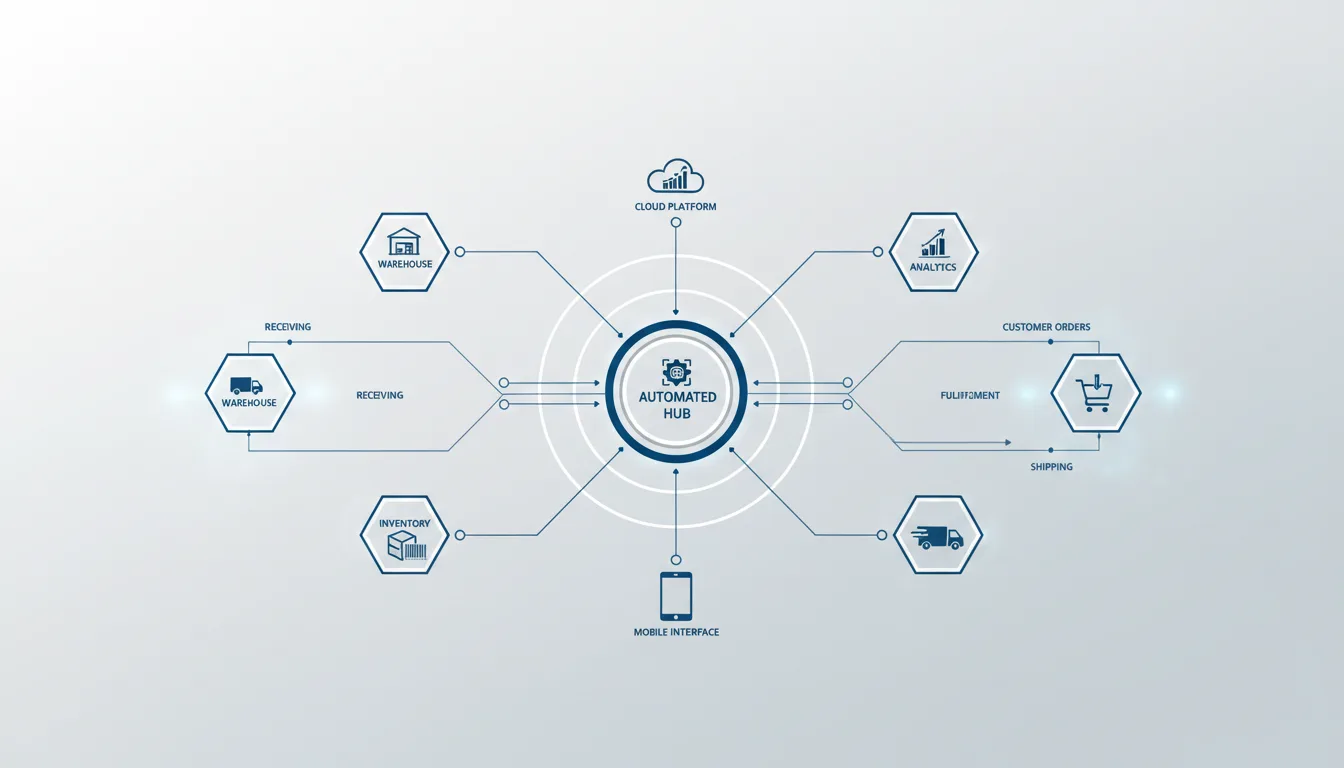
Automated inventory management refers to the use of technology and software systems to monitor and control inventory levels and orders, thereby enhancing operational efficiency. The primary purpose of this system is to streamline inventory processes, reduce manual errors, and improve overall accuracy in tracking stock levels across the supply chain. As businesses face increasing demand for real-time visibility and efficiency, automated inventory management systems have become essential tools in their operational strategies. This transformation leverages technologies like barcoding, radio-frequency identification (RFID), and sophisticated software platforms, such as visual inventory management systems, allowing businesses to maintain optimal stock levels, foresee customer needs, and reduce waste and carrying costs.
Etymology and Origins
The term "automated inventory management" derives from the amalgamation of "automation" and "inventory management." The concept of "automation" gained prominence in the industrial context during the mid-20th century, specifically attributed to Ford Motor Company in the late 1940s when they formed an automation department to oversee mechanically loading and unloading parts from production machines. Linguistically, "automation" comes from the Greek automatos, meaning "acting of itself."
"Inventory management," on the other hand, pertains to the systematic ordering, storing, and using of a company's inventory. Its roots can be traced to early forms of commerce, but modern scientific approaches began emerging in the early 20th century with models like the Economic Order Quantity (EOQ) formula, developed by Ford W. Harris in 1913. The early mention of inventory automation can be traced back to the mid-20th century, coinciding with the advent of computing technology and advancements in business management practices. The conceptual evolution of this process has increasingly recognized the importance of accuracy and efficiency within supply chain operations, moving from simple record-keeping to complex predictive analytics.
Historical Development
The practice of inventory management has existed for centuries, evolving from manual ledgers and physical counts in ancient civilizations and early mercantile systems. However, it began to see significant evolution in the 20th century with the application of scientific management principles.
-
Early 20th Century (1900s-1940s): The foundation of modern inventory control was laid with the development of quantitative models like the Economic Order Quantity (EOQ) by Ford W. Harris in 1913, aimed at minimizing total inventory costs. Companies primarily relied on manual accounting methods and reorder point systems based on historical demand.
-
Mid-20th Century (1950s-1960s): The advent of mainframe computers ushered in the first wave of inventory automation. In the 1960s, Material Requirements Planning (MRP) systems, pioneered by companies like IBM and Joseph Orlicky, began to revolutionize manufacturing. MRP allowed businesses to calculate raw material and component needs based on a master production schedule, significantly reducing guesswork and improving production efficiency. These early systems primarily relied on batch processing and were still prone to errors due to data entry and processing delays.
-
1970s-1980s: This period marked several pivotal advancements:
- The introduction of techniques such as Just-in-Time (JIT) inventory by Toyota in the 1970s, under the influence of pioneers like Taiichi Ohno, marked a pivotal milestone, encouraging firms to minimize stock on hand and only produce items as needed. This philosophy significantly impacted inventory holding costs and operational efficiency.
- MRP evolved into MRP II (Manufacturing Resource Planning), integrating additional functions like finance, marketing, and human resources into the planning process.
- The advent of barcoding in the 1980s, particularly with the widespread adoption of the Universal Product Code (UPC), revolutionized how companies managed inventory. It enabled faster, more accurate data retrieval and reduced manual input errors, becoming a cornerstone of automated tracking.
- Electronic Data Interchange (EDI) also emerged, allowing for standardized electronic communication of business documents, further automating purchase orders and invoices across the supply chain.
-
1990s-2000s: The rise of personal computing, client-server architectures, and the internet further accelerated automation. Enterprise Resource Planning (ERP) solutions emerged, integrating MRP II functionalities with other business processes like sales, accounting, and supply chain management into a single system. Dedicated Warehouse Management Systems (WMS) began to gain traction, offering specialized control over warehouse operations, from receiving to shipping. The dot-com boom and the rise of e-commerce also spurred the need for more agile and automated inventory systems.
-
2010s-Present: The 21st century has seen rapid advancements in real-time tracking and predictive capabilities. The proliferation of cloud computing made sophisticated systems more accessible, reducing the burden of on-premise infrastructure. Radio-frequency identification (RFID) technology became more viable, offering passive and active tracking capabilities. The integration of Artificial Intelligence (AI) and Machine Learning (ML) algorithms now enables advanced demand forecasting, inventory optimization, and automated reorder point calculations. Mobile solutions, such as the mobile warehouse management system, provide unprecedented flexibility and real-time data capture on the go. Key figures such as W. Edwards Deming influenced these developments by advocating for quality management and continuous improvement in processes, principles that are intrinsically linked to efficient inventory flow.
Core Concepts
Automated inventory management generally consists of several core components, all working in concert to maintain optimal stock levels and operational efficiency:
- Real-time Tracking: Utilizing technologies such as RFID, barcode scanning, and increasingly, IoT sensors, enables businesses to monitor inventory levels, locations, and movements with precision as they happen. This eliminates delays and provides an accurate snapshot of stock availability, crucial for e-commerce and omnichannel fulfillment.
- Inventory Optimization: Advanced algorithms and predictive analytics, often powered by AI/ML, help forecast demand, determine optimal reorder points, and calculate safety stock levels based on historical data, seasonality, promotions, and market trends. This capability, often found in tools supporting automated purchase quantity, aids in avoiding costly overstocking or detrimental stockouts.
- Integration with Supply Chain Systems: Seamless integration with other critical systems like Enterprise Resource Planning (ERP), Order Management Systems (OMS), Transportation Management Systems (TMS), and Customer Relationship Management (CRM) tools is vital. This enhances visibility and information flow across the entire supply chain, improving decision-making, reducing lead times, and facilitating end-to-end process automation.
- Reporting and Analytics: Robust reporting and analytical tools transform raw inventory data into actionable insights. Businesses can assess performance metrics (e.g., inventory turnover, stock-to-sales ratio, carrying costs), identify bottlenecks, and forecast future needs effectively. This also includes capabilities for auditing and compliance reporting.
Types and Classifications
There are several approaches to automated inventory management, often implemented in combination:
- Perpetual Inventory System: This system continuously updates inventory records with each transaction (e.g., receipt, sale, transfer). It provides real-time visibility into stock levels, making it ideal for high-volume businesses and critical for e-commerce. Technologies like barcode scanners and mobile WMS are central to maintaining perpetual accuracy. Cycle counting is a crucial practice within perpetual systems to maintain data integrity.
- Periodic Inventory System: While less common in highly automated environments, periodic systems involve physical counts and updates at fixed intervals (e.g., monthly, quarterly). Automation in this context might involve digital tools to streamline the counting process and data entry. However, the benefits of real-time tracking are absent between counts.
- Automated Warehouse Management Systems (WMS): These are comprehensive software solutions that manage and optimize all warehouse operations, from goods receipt and putaway (e.g., bin putaway criteria) to picking (e.g., batch picking, pick-to-tote), packing, and shipping. A mobile WMS enhances efficiency by providing real-time data on the warehouse floor, often integrating with visual inventory management systems and supporting functionalities like stock replenishment and bin-to-bin inventory transfers.
- Vendor-Managed Inventory (VMI): In this model, a supplier takes responsibility for managing the inventory levels of their products at the customer's location. Automated systems facilitate data sharing between vendor and customer, allowing the vendor to automatically replenish stock based on agreed-upon levels and forecasts.
Industry Applications
Automated inventory management is widely applicable across various sectors, providing tailored solutions to meet specific industry demands:
- Retail & E-commerce: Retailers, including e-commerce platforms like those using Shopify or needing Shopify Plus features, utilize automated systems for real-time stock control, global inventory visibility, and to optimize order fulfillment. This is crucial for managing diverse product catalogs, handling returns, and supporting omnichannel strategies where inventory must be visible across brick-and-mortar and online channels.
- Manufacturing: Ensures that raw materials, work-in-progress (WIP), and finished goods are readily available for production without excessive surplus or costly shortages. Automated systems integrate with MRP/ERP to optimize production schedules, manage bills of material, and track components through various stages of assembly, often leveraging bin-to-bin inventory transfers within the production facility.
- Pharmaceuticals & Healthcare: Adheres to stringent regulatory requirements regarding tracking, tracing, and expiration dates. Automated systems are essential for managing sensitive medical supplies, vaccines, and pharmaceuticals, supporting lots and expiration dates to ensure compliance, patient safety, and minimize waste due to spoilage.
- Automotive: Manages a vast array of parts and components for manufacturing and aftermarket sales. Automated systems support Just-in-Time (JIT) delivery, ensuring that parts arrive precisely when needed on the assembly line, minimizing holding costs and production delays.
- Food & Beverage: Deals with perishable goods and strict freshness requirements. Automated inventory management tracks product batches, expiration dates, and facilitates efficient first-in, first-out (FIFO) inventory rotation, reducing spoilage and ensuring food safety.
Benefits and Advantages
The adoption of automated inventory management systems presents several compelling advantages for businesses of all sizes:
- Enhanced Accuracy: By significantly reducing manual data entry and human error through technologies like barcode scanning and RFID, automation drastically improves data reliability and stock count accuracy. This leads to fewer discrepancies and more dependable inventory records.
- Cost Efficiency: Minimizes carrying costs (storage, insurance, obsolescence) by ensuring optimal inventory levels, reducing excess stock, and preventing stockouts that can lead to lost sales. This directly increases profitability and frees up working capital.
- Improved Customer Satisfaction: Accurate stock information prevents overselling and enables faster, more reliable order fulfillment. Businesses can promise and deliver goods more efficiently, leading to higher customer retention and satisfaction. This is particularly vital in the competitive e-commerce landscape where shipping speed is a differentiator.
- Increased Operational Efficiency: Streamlines various warehouse operations, from receiving and putaway to picking and shipping, reducing labor costs and improving throughput. Features like batch picking and cross-docking can dramatically speed up fulfillment processes.
- Better Decision Making: Real-time data and advanced analytics provide deeper insights into inventory performance, demand patterns, and supply chain health, enabling more informed and proactive business decisions.
Challenges and Limitations
Despite its benefits, automated inventory management also presents several challenges that organizations must address:
- High Initial Costs: The investment required for software licenses, hardware (scanners, RFID readers, potentially robotics), infrastructure upgrades, and implementation services can be substantial, especially for smaller businesses. However, the ROI on WMS solutions can quickly offset these costs.
- Integration Difficulties: Ensuring seamless compatibility and data flow between the automated inventory system and existing ERP, accounting, or e-commerce platforms can be complex and time-consuming. Poor integration can lead to data silos and hinder overall system effectiveness, highlighting the need for robust integrations.
- Data Accuracy Dependence: The effectiveness of automation is highly dependent on the accuracy of input data. Errors in barcode scanning, product data, or initial inventory counts can propagate through the system, leading to inaccurate outputs. Maintaining accurate barcodes is paramount.
- Training and Adoption: Employees require proper training to effectively use new automated systems and hardware. Resistance to change or inadequate training can impede successful implementation and lead to operational inefficiencies.
- Security Risks: Centralizing inventory data increases the risk of cyber threats. Robust cybersecurity measures are essential to protect sensitive business information and prevent unauthorized access or data breaches.
Best Practices
To maximize the benefits of automated inventory management, businesses should adopt a strategic approach and adhere to best practices:
- Establish Data Integrity Protocols: Implement rigorous processes for data capture, validation, and maintenance from the outset. This includes ensuring accurate barcodes, precise unit of measure definitions (e.g., unit of measure guide), and consistent product master data. Regular cycle counting is essential for validating physical stock against system records.
- Thorough Planning and Phased Implementation: Develop a detailed implementation plan that includes clear objectives, stakeholder involvement, and a phased rollout strategy. Begin with a pilot program before scaling across the entire operation. Utilize resources like a quick start guide and onboarding documentation for a smoother transition.
- Integrate Key Systems: Prioritize seamless integration with ERP, OMS, CRM, and e-commerce platforms (like Shopify integration) to ensure a unified flow of information across the supply chain. This avoids data silos and provides a holistic view of operations.
- Leverage Advanced Analytics and Reporting: Regularly utilize the reporting and analytical capabilities of the system to monitor key performance indicators (KPIs), identify trends, forecast demand, and make data-driven decisions for continuous improvement. This includes assessing ROI on WMS solutions.
- Continuous Training and Process Optimization: Provide ongoing training for staff to ensure proficiency with the system and new technologies. Regularly review and optimize inventory processes, perhaps by implementing custom workflows, to adapt to changing business needs and technological advancements.
- Vendor Relationship Management: Establish strong relationships with software providers and hardware vendors. Regularly communicate needs, provide feedback, and stay informed about updates and new features that can further enhance automated capabilities.
Technology and Tools
Modern automated inventory management solutions often incorporate cutting-edge technologies to drive efficiency and intelligence:
- Artificial Intelligence (AI) & Machine Learning (ML): These technologies power predictive analytics for demand forecasting, optimize reorder points, identify slow-moving inventory, and even suggest optimal bin putaway criteria. AI can also automate routine tasks and enhance decision-making by analyzing vast datasets.
- Internet of Things (IoT): IoT devices, such as smart shelves and sensors, can monitor inventory levels, environmental conditions (e.g., temperature for perishables), and asset location in real time, feeding data directly into the inventory management system.
- Mobile Solutions: Applications running on smartphones, tablets, and ruggedized mobile devices enable on-the-go inventory management. A mobile warehouse management system allows staff to perform tasks like receiving, picking, packing, and cycle counting directly from the warehouse floor, improving efficiency and accuracy.
- Robotics & Automation: Automated Guided Vehicles (AGVs), Autonomous Mobile Robots (AMRs), and robotic picking systems are increasingly used in warehouses to handle tasks like material transport, putaway, and order fulfillment, especially in high-volume operations. These technologies integrate with the WMS to optimize movements and processes.
- Barcode & RFID Technologies: Fundamental for automated data capture, barcodes offer cost-effective tracking, while RFID provides faster, contactless, and bulk scanning capabilities, enhancing real-time visibility without line-of-sight requirements.
- Cloud Computing: SaaS (Software as a Service) models for inventory management systems reduce IT overhead, offer scalability, and enable remote access, facilitating distributed operations and integration across multiple locations.
- Visual Management Tools: Platforms offering visual inventory management or warehouse layout previews provide intuitive graphical interfaces to monitor stock, optimize space, and streamline operations, making complex data easily digestible.
Future Trends
The landscape of automated inventory management is continually evolving, driven by technological innovation and changing market demands:
- Hyper-Automation: Expect even greater integration of AI, ML, robotics, and process automation to create fully autonomous warehouses capable of managing most operations with minimal human intervention. This includes self-optimizing inventory levels and predictive maintenance for equipment.
- Blockchain for Supply Chain Transparency: Blockchain technology holds promise for creating immutable and transparent records of inventory movement across the entire supply chain, enhancing traceability, reducing fraud, and improving trust among stakeholders.
- Predictive Logistics: Leveraging advanced analytics and AI to not only forecast demand but also predict potential supply chain disruptions, optimize routing, and anticipate inventory needs weeks or months in advance, moving beyond reactive management.
- Enhanced Sustainability: Automated systems will play a crucial role in minimizing waste, optimizing storage space, and reducing transportation emissions through more efficient inventory planning and logistics, supporting circular economy initiatives.
- Digital Twins: Creation of digital replicas of physical warehouses and inventory, allowing for simulations and real-time monitoring to optimize layouts, test new strategies, and predict performance before physical implementation.
Related Concepts
Automated inventory management intersects with various logistics and supply chain concepts, forming a critical component of a cohesive operational strategy. These include:
- Supply Chain Management (SCM): Automated inventory management is a core pillar of SCM, ensuring the smooth flow of goods from suppliers to customers. It directly impacts lead times, supplier relationships, and overall supply chain resilience.
- Logistics Optimization: The goal of automated systems is to optimize logistics processes, including warehousing, transportation, and distribution, to achieve greater efficiency, speed, and cost-effectiveness.
- Order Fulfillment Strategies: Seamless integration with order fulfillment software and shipping and fulfillment software ensures that orders are picked, packed, and shipped accurately and rapidly, directly impacting customer satisfaction.
- Enterprise Resource Planning (ERP): Automated inventory modules are often integrated into larger ERP systems, providing a unified platform for managing all aspects of a business, from finance to operations.
- Demand Planning and Forecasting: Automated inventory management relies heavily on accurate demand planning and forecasting to determine optimal stock levels and replenishment strategies.
- Warehouse Robotics: As described, the integration of robotics into automated inventory systems is transforming warehouse operations, leading to higher throughput and reduced labor needs.
Integrating these concepts and systems ensures seamless operations throughout the supply chain, driving competitive advantage through efficiency and responsiveness.
Sources
- Visual Inventory Management System
- Mobile Warehouse Management System
- Stock Replenishment Guide
- Lots & Expiration Dates
- Shopify Inventory Management
- Production Control and the Computer
- Economic Order Quantity (EOQ): Formula and How It Works
- Material Requirements Planning (MRP): Benefits and Process
- Just-in-Time (JIT) Inventory: How It Works and Example
- What is MRP II (Manufacturing Resource Planning)?
- RFID Standards and Technology
- The future of AI in supply chain management
- W. Edwards Deming – The Deming Institute
- Reorder Point: What It Is, Formula, and Example
- First-In, First-Out (FIFO): Definition, Uses, and Example
- Barcodes Guide
- Automated Purchase Quantity
- Order Management System
- Cycle Counting Guide
- Bin Put-Away Criteria
- Batch Picking Guide
- Pick-to-Tote Guide
- Bin-to-Bin Transfers
- Shopify Plus Features
- Shopify Global Inventory
- Cross-Docking Guide
- WMS ROI Calculator
- Integrations Hub
- Unit of Measure Guide
- Quick Start Guide
- Onboarding Guide
- Shopify Integration Setup
- Workflows Overview
- Warehouse Layout Preview
- Pick, Pack, Ship Software
- Shipping & Fulfillment Software