Asset Management in Logistics
A detailed exploration of asset management within the logistics sector, including its definition, history, applications, and best practices.
Updated
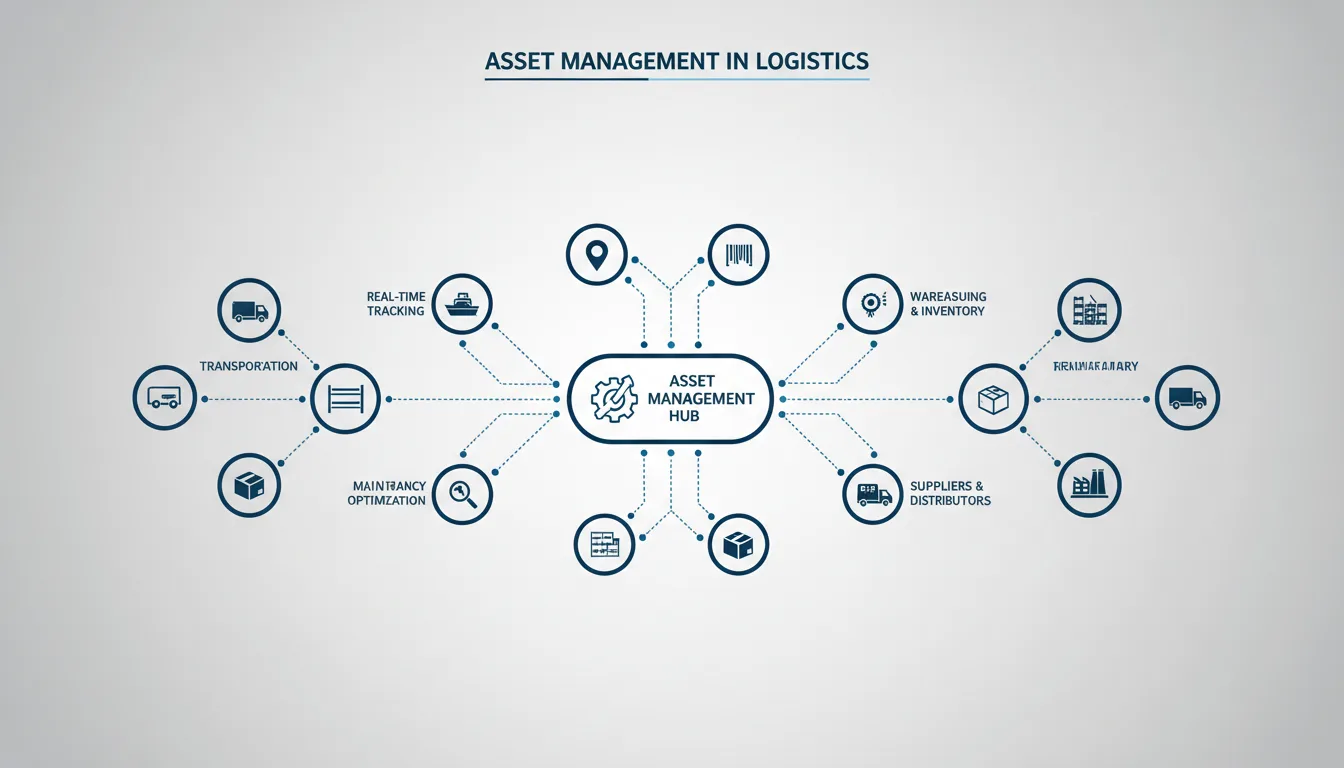
Overview
Asset management in logistics refers to the systematic process of developing, operating, maintaining, and disposing of assets in a cost-effective manner to achieve organizational objectives [3]. This field is crucial for logistics professionals as it encompasses not only physical assets such as transportation vehicles, handling equipment, infrastructure, and inventory, but also intangible assets like software licenses, data, and intellectual property [4]. Effective asset management ensures optimal utilization, minimizes operational costs, extends asset lifespan, mitigates risks, and maximizes the value of assets throughout their entire lifecycle, directly impacting supply chain efficiency and profitability.
Etymology and Origins
The term "asset management" can be traced back to the financial sector in the late 1970s and early 1980s, primarily relating to investment management and wealth management, where it focused on optimizing financial portfolios [5]. The linguistic roots lie in the word "asset," which originates from the Old French "asez" or "assetz," meaning "enough" or "sufficient," evolving from the Latin "ad satis." This implied something held to be sufficient for a particular purpose or obligation. The term "manage" comes from the Latin "manus" (hand) via Italian "maneggiare" (to handle or train horses), reflecting control and direction [6].
Initially, its application in physical asset-intensive industries like utilities and manufacturing gained traction in the late 20th century as organizations sought to apply similar optimization principles to their physical holdings [7]. Over time, the scope expanded significantly to include physical assets in logistics and supply chain management, driven by increasing complexity, global competition, and the need for greater operational efficiency. Today, asset management encompasses a myriad of methodologies and best practices aimed at maximizing asset utility across various sectors, from finance to physical supply chains.
Historical Development
Asset management concepts have evolved significantly over the decades, moving from reactive maintenance to strategic lifecycle optimization.
- Pre-1950s: Foundations in Maintenance and Efficiency: Early forms of asset management emerged with the industrial revolution, focusing primarily on machine maintenance to prevent breakdowns. Scientific management principles, championed by Frederick Winslow Taylor in the early 20th century, sought to optimize resource utilization and labor efficiency, laying groundwork for systematic approaches [8].
- 1950s-1970s: Rise of Operations Research and Early Computerization: Post-World War II, operations research techniques were applied to optimize resource allocation, inventory levels, and scheduling. The advent of mainframe computers allowed for early computerized inventory tracking and basic preventive maintenance scheduling [9]. Concepts like Material Requirements Planning (MRP) began to emerge, aiming to coordinate production and inventory, albeit with limited real-time capabilities.
- 1980s: Just-In-Time (JIT) and CMMS: The widespread adoption of Just-In-Time (JIT) manufacturing, popularized by the Toyota Production System, emphasized lean operations and the elimination of waste, including inefficient asset use [10]. This period saw the introduction of Computerized Maintenance Management Systems (CMMS), which enabled enhanced tracking of physical assets, maintenance schedules, and spare parts inventory. These systems were critical in shifting from reactive to preventive maintenance strategies.
- 1990s: ERP and Total Productive Maintenance (TPM): The advent of Enterprise Resource Planning (ERP) systems, such as those from SAP and Oracle, revolutionized business processes by integrating various functions, including asset management, finance, human resources, and supply chain. ERP systems facilitated integrated asset management across various business processes and functions, providing a holistic view. Simultaneously, Total Productive Maintenance (TPM) gained prominence, advocating for employee involvement in daily maintenance and continuous improvement of asset performance [11].
- 2000s: RTLS, IoT, and RFID for Visibility: The acceptance of Real-Time Location Systems (RTLS), Radio-Frequency Identification (RFID), and early Internet of Things (IoT) integrated solutions revolutionized asset tracking and management, offering unprecedented visibility into asset location and status. This enabled more dynamic inventory management, improved security, and optimized utilization of mobile assets like forklifts and vehicles [12].
- 2010s: Cloud Computing, APM, and Sustainability: This decade saw the widespread adoption of cloud-based asset management solutions, making advanced functionalities accessible to a broader range of businesses. The focus shifted to Asset Performance Management (APM), integrating condition monitoring, predictive analytics, and reliability engineering. Moreover, the increasing awareness of environmental impact led to a strong focus on sustainable asset management practices, integrating lifecycle management, circular economy principles, and environmental considerations into decision-making.
- 2020s and Beyond: AI, Blockchain, and Digital Twins: Current trends include the pervasive use of Artificial Intelligence (AI) and Machine Learning (ML) for predictive maintenance, demand forecasting, and autonomous asset optimization. Blockchain technology offers enhanced transparency and traceability for high-value assets across complex supply chains, ensuring data integrity and provenance [13]. The concept of Digital Twins — virtual replicas of physical assets — is emerging, allowing for real-time monitoring, simulation, and predictive analysis to optimize asset performance and prevent failures.
Notable figures in the early development of these concepts include Peter Drucker, who emphasized the importance of effective management practices and productivity, and W. Edwards Deming, whose work on quality management influenced maintenance and operational excellence. Companies like General Electric were pioneers in developing early asset management software solutions for their extensive industrial operations. Major publications such as the "Asset Management: A Systematic Approach to Factor Investing" (though focused on finance, it underscored systematic principles) and academic works on maintenance engineering and operations research provided foundational frameworks for effective asset utilization.
Core Concepts
At its core, asset management in logistics revolves around several key principles designed to maximize value and efficiency throughout the asset's lifespan:
- Lifecycle Management: This involves understanding and optimizing each stage of an asset's life, from initial planning, acquisition (e.g., procurement of new fleet vehicles or warehouse equipment), deployment, operation, maintenance, and eventually, disposal or retirement. The goal is to maximize the asset's utility and economic return over its entire operational life [14].
- Performance Measurement: Leveraging Key Performance Indicators (KPIs) is critical to assess asset efficiency and effectiveness. Common KPIs include Overall Equipment Effectiveness (OEE) for machinery, asset utilization rates, uptime percentages, maintenance costs per asset, asset turnover ratio, and return on assets (ROA). Cycle counting is a crucial practice for inventory assets to ensure data accuracy for performance metrics.
- Risk Management: Identifying, assessing, and mitigating risks associated with asset performance, reliability, and security is paramount. This includes operational risks (e.g., breakdowns, downtime), financial risks (e.g., unexpected costs, obsolescence), safety risks, and compliance risks related to environmental regulations or data security. Proactive risk management ensures business continuity and protects asset investments.
- Integration with Other Functions: Seamlessly linking asset management with inventory management, operations planning, finance, human resources, and supply chain functions is essential for holistic optimization. This integration is often facilitated by comprehensive ERP systems, Warehouse Management Systems (WMS), Transportation Management Systems (TMS), and Order Management Systems (OMS). For instance, an integrated system can trigger purchase orders for spare parts based on predictive maintenance insights or optimize inventory storage locations using bin put-away criteria.
Effective asset management leads to improved operational efficiency, reduced total cost of ownership (TCO), enhanced decision-making processes, and a stronger competitive advantage within organizations.
Industry Applications
Asset management plays a vital role in various sectors, demonstrating its versatility and critical importance:
- Manufacturing: Focuses on managing production equipment, machinery, and facilities to ensure high operational efficiency, minimize downtime, and maintain product quality. Predictive maintenance driven by IoT sensors is a key application here.
- Transportation & Logistics: Encompasses fleet management (trucks, ships, aircraft), container management, and material handling equipment (forklifts, conveyors). The aim is to optimize vehicle routing, reduce fuel consumption, manage maintenance schedules, and maximize asset utilization. This is where mobile warehouse management systems and shipping and fulfillment software become critical.
- Retail & E-commerce: Manages inventory assets across distribution centers and retail stores, optimizing stock levels, preventing obsolescence, and improving order fulfillment processes. Effective visual inventory management systems are fundamental in retail to align stock levels with demand efficiently, often integrated with Shopify inventory management for online operations.
- Healthcare: Involves tracking and managing medical equipment (e.g., MRI machines, surgical tools), hospital beds, and pharmaceuticals. This ensures equipment availability, compliance with stringent regulations, and efficient patient care. RFID and RTLS are commonly used for high-value asset tracking.
- Utilities: Manages extensive infrastructure like power grids, pipelines, and communication networks. The focus is on ensuring reliability, safety, and regulatory compliance through robust maintenance and capital investment planning.
For instance, a major logistics provider might leverage advanced telematics to track its fleet of delivery trucks, monitoring engine diagnostics, driver behavior, and GPS locations in real-time. This data allows them to schedule preventive maintenance, optimize delivery routes, and quickly dispatch assistance in case of a breakdown, significantly reducing operational costs and improving service reliability.
Benefits and Advantages
The primary benefits of effective asset management extend across operational, financial, and strategic dimensions:
- Cost Efficiency and Reduction: By optimizing asset utilization, extending asset lifespan through preventive maintenance, and reducing unexpected breakdowns, organizations can significantly lower operational expenditures, maintenance costs, and capital expenditures. This also includes minimizing inventory holding costs through precise inventory control.
- Improved Visibility and Decision-Making: Real-time tracking and data analytics provide comprehensive insights into asset performance, location, and condition. This enhanced visibility enables better planning, forecasting, and strategic decision-making, such as optimizing warehouse layouts with a warehouse layout preview or managing lots and expiration dates for perishable goods.
- Enhanced Customer Satisfaction: By ensuring the availability of products, timely delivery, and reliable service, effective asset management directly contributes to higher customer satisfaction. Optimized fleet and warehouse operations mean faster and more accurate order fulfillment, a critical factor in today's demanding market.
- Regulatory Compliance and Risk Mitigation: Systematic asset tracking, maintenance records, and compliance checks ensure adherence to industry regulations, safety standards, and environmental requirements. This proactive approach reduces the risk of penalties, accidents, and operational disruptions.
- Increased Productivity and Uptime: Well-maintained and optimally utilized assets lead to fewer breakdowns, reduced downtime, and higher overall productivity. This is particularly crucial for manufacturing lines and core logistics infrastructure, where disruptions can be costly.
Challenges and Limitations
Despite its numerous advantages, implementing and maintaining effective asset management systems presents several significant challenges:
- Data Management and Quality: Inconsistent, siloed, or inaccurate data across disparate systems can severely hinder effective asset tracking, analysis, and decision-making. Ensuring data integrity from various sources (e.g., sensors, ERP, WMS) is a complex task [15].
- Technological Integration and Legacy Systems: Integrating new, advanced technologies (like IoT, AI) with existing legacy systems often poses significant technical difficulties, high costs, and interoperability issues. Many organizations struggle with modernizing their IT infrastructure without disrupting ongoing operations.
- Training, Skill Gaps, and Change Management: Ensuring staff are adequately trained to utilize sophisticated asset management tools and adopt new processes is crucial. Resistance to change, lack of technical skills, and insufficient investment in workforce development can limit the full potential of new systems.
- High Initial Capital Investment: Implementing comprehensive asset management solutions, especially those involving advanced hardware (sensors, RFID readers) and software, can require substantial upfront capital investment, making ROI justification critical.
- Complexity of Asset Portfolios: Managing diverse asset types (from vehicles to IT infrastructure to inventory batches with unit of measure conversions) across multiple locations and lifecycles introduces immense complexity, requiring robust systems and sophisticated planning.
Best Practices
To achieve optimal asset management, organizations should consider the following best practices, focusing on a holistic and proactive approach:
- Develop a Comprehensive Asset Strategy: Align asset management objectives with overall business goals. This includes defining clear policies for acquisition, maintenance, utilization, and disposal, ideally following international standards like ISO 55000 [16].
- Implement Proactive and Predictive Maintenance: Move beyond reactive maintenance to scheduled preventive and condition-based predictive maintenance. Leverage IoT sensors and AI/ML for anomaly detection and forecasting potential equipment failures before they occur, maximizing uptime and reducing costs.
- Regular Audits and Performance Reviews: Conduct periodic, systematic reviews of asset performance, condition, and depreciation. Utilize data from cycle counting and other KPIs to identify opportunities for improvement, optimize maintenance schedules, and inform capital expenditure decisions.
- Leverage Advanced Technology: Adopt modern asset management systems (EAM, APM), WMS, TMS, and integrate emerging technologies such as AI, Machine Learning, RFID, and IoT for enhanced tracking, data analysis, and automation. Solutions like SkuSavvy's mobile WMS empower logistics teams with real-time data access and operational control.
- Foster Cross-Functional Collaboration: Encourage strong cooperation between maintenance, operations, finance, IT, and supply chain departments. Establish cross-functional teams or committees to align asset management goals with broader organizational objectives, facilitating informed decision-making regarding asset investments and lifecycle planning.
- Continuous Improvement and Training: Regularly review and refine asset management processes based on performance data and industry benchmarks. Invest in ongoing training for staff to ensure they are proficient in using new tools and understanding best practices, supporting a culture of continuous improvement.
Technology and Tools
Modern asset management is heavily reliant on sophisticated technology tools that integrate various aspects of asset lifecycle. Key solutions include:
- Enterprise Asset Management (EAM) Systems: Comprehensive software platforms designed to manage the entire lifecycle of physical assets, from procurement to disposal, covering maintenance, operations, and financial aspects.
- Computerized Maintenance Management Systems (CMMS): Focus specifically on maintenance operations, scheduling, work orders, spare parts inventory, and labor management.
- Warehouse Management Systems (WMS): Critical for managing inventory and warehouse equipment assets. Mobile warehouse management systems like SkuSavvy empower logistics teams with real-time data access, barcode scanning capabilities (barcodes guide), and visual tools like a warehouse layout preview for optimizing storage and movement.
- Transportation Management Systems (TMS): Optimize fleet assets, route planning, load optimization, and freight management.
- IoT Devices and Sensors: Provide real-time data on asset location, condition, performance (e.g., temperature, vibration, fuel levels), enabling predictive maintenance and enhanced tracking.
- Artificial Intelligence (AI) & Machine Learning (ML) Platforms: Used for predictive analytics, anomaly detection, demand forecasting for spare parts, and optimizing maintenance schedules.
- RFID and GPS Tracking: Essential for precise real-time location tracking of assets, improving security and utilization, particularly for mobile assets and high-value inventory.
- Digital Twin Technology: Creates virtual models of physical assets, allowing for simulation, testing, and optimization in a digital environment before physical implementation or during operation.
Future Trends
The future of asset management in logistics is poised to be shaped by several transformative trends, driven by advancements in technology and increasing demands for efficiency and sustainability:
- Artificial Intelligence (AI) and Machine Learning (ML) for Predictive and Prescriptive Maintenance: AI will move beyond just predicting failures to prescribing optimal actions, automating maintenance scheduling, optimizing spare parts inventory (automated purchase quantity), and even enabling autonomous repair processes in some cases. This will significantly reduce unplanned downtime and maintenance costs [17].
- Blockchain Technology for Enhanced Traceability and Trust: Blockchain will provide immutable and transparent records of an asset's entire lifecycle, including ownership, maintenance history, and origin. This is particularly valuable for high-value goods, preventing counterfeiting, ensuring ethical sourcing, and streamlining audits across complex supply chains [18].
- Digital Twins for Real-time Optimization and Simulation: The creation of digital twins for physical assets (vehicles, equipment, warehouses) will allow logistics managers to monitor assets in real-time, simulate various scenarios, predict performance, and optimize operations without impacting the physical asset. This enables proactive decision-making and continuous improvement.
- Increased Focus on Sustainability and Circular Economy Principles: Asset management will play a more significant role in achieving environmental goals, focusing on extending asset life, facilitating refurbishment and recycling, reducing energy consumption, and minimizing waste throughout the asset lifecycle. This aligns with a broader shift towards a circular economy [19].
- Augmented Reality (AR) and Virtual Reality (VR) for Maintenance and Training: AR/VR technologies will be increasingly used for remote assistance in maintenance, providing technicians with overlaid digital information, and for immersive training simulations, reducing errors and improving efficiency.
- Hyperautomation and Autonomous Operations: The integration of various automation technologies (RPA, AI, IoT) will lead to hyperautomated asset management, where processes like inventory replenishment (stock replenishment guide), diagnostic checks, and even some repairs become fully autonomous, minimizing human intervention.
A comprehensive understanding and proactive adoption of these trends will be essential for logistics professionals to navigate the evolving landscape effectively and maintain a competitive edge.
Sources
- Visual Inventory Management System
- Mobile Warehouse Management System Overview
- ISO 55000: Asset management - Overview, principles and terminology
- IBM Maximo: What is enterprise asset management (EAM)?
- Wikipedia: Asset Management
- Online Etymology Dictionary: Asset, Manage
- Global Forum on Maintenance and Asset Management: Asset Management History
- The Principles of Scientific Management by Frederick Winslow Taylor
- Decision-Making in Operations Research: A Historical Perspective
- The Toyota Production System: Leaner Manufacturing for a Greener Planet
- Total Productive Maintenance (TPM) by Seiichi Nakajima
- IoT in Supply Chain: Smart Logistics and Asset Tracking
- Blockchain in Supply Chain Management: An Overview
- Institute of Asset Management (IAM): Asset Lifecycle
- Deloitte: The Challenge of Data Quality in Supply Chain
- ISO 55000: Asset management — Overview, principles and terminology
- AI in Predictive Maintenance: Transforming Industry
- Automated Purchase Quantity
- Ellen MacArthur Foundation: The circular economy in detail
- Purchase Order Management
- Order Management System
- Bin Put-Away Criteria
- Shipping and Fulfillment Software
- Shopify Inventory Management
- Warehouse Layout Preview
- Lots & Expiration Dates
- Unit of Measure Conversion
- Stock Replenishment Guide
- Barcodes Guide