AI Platforms in Logistics and Supply Chain Management
This article examines AI platforms' roles, origins, applications, and benefits in logistics and supply chain management.
Updated
AI Platforms in Logistics and Supply Chain Management
Overview
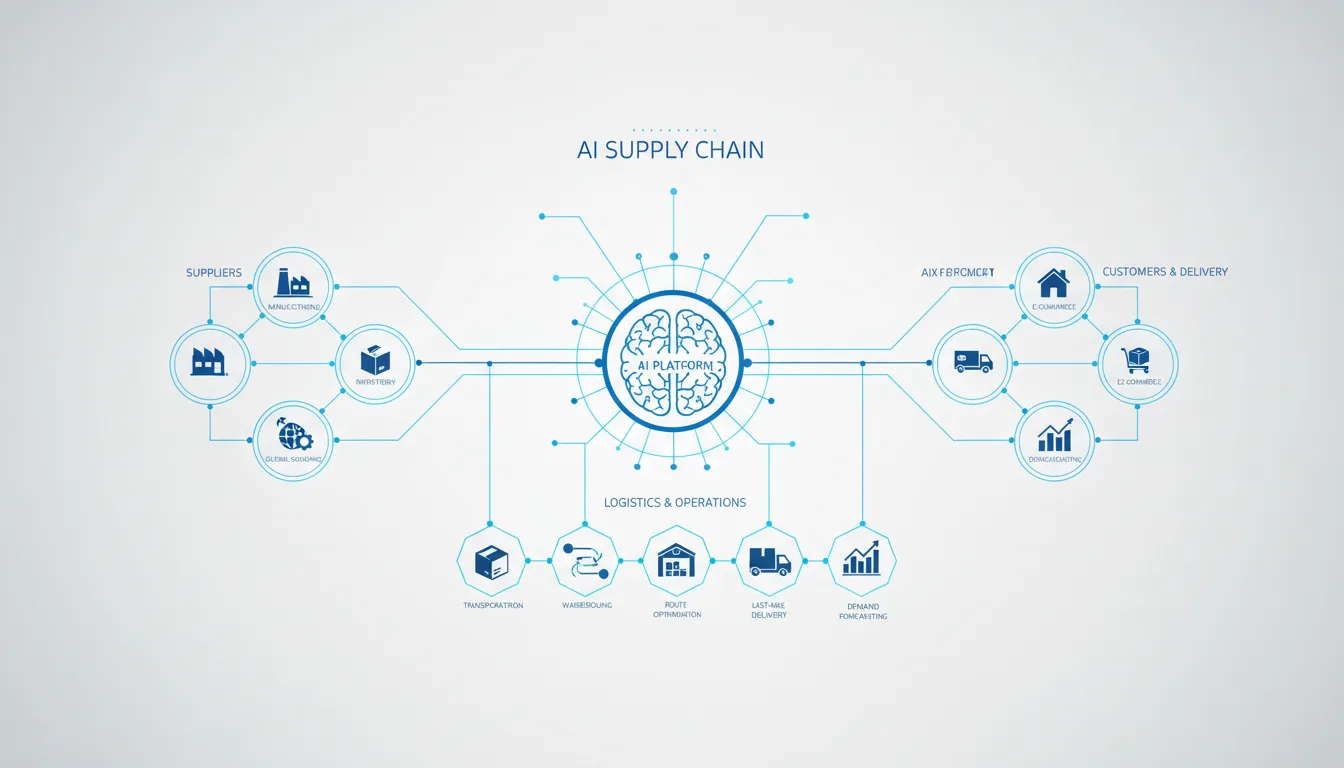
AI platforms in logistics are sophisticated software solutions designed to optimize operations in the supply chain through data-driven decision-making. These platforms leverage artificial intelligence to analyze data and automate various processes, enhancing efficiency, reducing costs, and improving customer satisfaction. As logistics and supply chain management become increasingly complex, the integration of AI provides significant advantages, including predictive analytics, automation, and enhanced visibility across the supply chain.
Etymology and Origins
The term artificial intelligence was coined in 1956 during the Dartmouth Conference, which is widely regarded as the birth of AI. Initially used in academic research, the term has evolved to encompass various applications, including logistics software. The intersection of AI and logistics gained momentum in the late 20th century as computing power increased and data analytics became more sophisticated. The rise of machine learning technologies in the 2000s and advancements in data processing significantly contributed to the adoption of AI in logistics.
Historical Development
1960s-1980s: Early Developments
AI applications in logistics began to surface in the 1960s within military logistics for decision support. Early tools included optimizing algorithms, such as the Transportation Problem solver. With the introduction of more sophisticated optimization algorithms in the 1970s, companies started exploring AI's potential in supply chain management, marking significant shifts in logistics practices.
1990s: Emergence of Software Solutions
By the 1990s, various software solutions utilizing AI for inventory optimization and demand forecasting emerged. Companies like SAP pioneered ERP (Enterprise Resource Planning) systems that began integrating AI components into inventory and supply chain management, allowing greater control over operations and resources. Publications like the APICS body of knowledge began emphasizing these technologies in their educational materials. APICS
2000s: The Data Revolution
The explosion of big data in the early 2000s allowed AI platforms to thrive. Companies such as IBM and Oracle introduced more refined predictive analytics tools that catapulted logistics organizations into new operational paradigms. This period marked the transition from basic inventory management to sophisticated data utilization for strategic advantages, particularly in demand forecasting.
2010s-Present: Mainstream Adoption
AI platforms gained significant traction with advancements in machine learning and deep learning techniques throughout the 2010s. The introduction of IoT devices provided real-time data, enriching AI capabilities for logistics. Companies like Amazon adopted platforms that automated order fulfillment, optimized routes, and improved customer relations, as outlined in various order management systems.
Core Concepts
AI platforms in logistics operate primarily on machine learning algorithms, which analyze historical data patterns to predict future outcomes. Key functionalities include:
- Predictive Analytics: Utilizing past data to forecast demand and adjust inventory levels accordingly. This helps in managing stock and reducing holding costs.
- Automation: AI systems automate repetitive tasks such as order processing and tracking, significantly increasing efficiency.
- Real-Time Visibility: AI enables real-time tracking of shipments and inventory, enhancing transparency throughout the supply chain, which in turn improves customer service.
Industry Applications
The integration of AI platforms within logistics has led to numerous applications across various sectors:
- Transportation Management: Companies utilize AI for route optimization and predictive maintenance of vehicles. This helps in reducing fuel costs and improving delivery times. For example, UPS has integrated AI to optimize delivery routes, saving millions in fuel costs annually.
- Warehouse Management: AI enhances warehouse operations, including inventory management and order fulfillment processes, through predictive insights. Major retailers like Walmart use AI for efficient stock management in their distribution centers.
- Demand Forecasting: AI platforms analyze market trends and consumer behavior to provide accurate demand forecasts, facilitating better purchasing decisions.
Benefits and Advantages
AI platforms offer numerous advantages to logistics companies:
- Cost Reduction: Automation of repetitive tasks leads to lower operational costs.
- Efficiency Improvement: AI optimizes supply chain operations, providing speed and accuracy in processing orders.
- Enhanced Customer Experience: With real-time insights, companies can offer better service and quicker response times, leading to greater customer satisfaction.
Challenges and Limitations
Despite the benefits, there are several challenges associated with AI platforms in logistics:
- Data Quality: AI's effectiveness depends heavily on the quality of the input data; inaccurate data can lead to erroneous outcomes. Organizations like Deloitte emphasize the need for robust data governance. Deloitte Insights on Data Governance
- Integration Complexity: Incorporating AI into existing systems can be complex and resource-intensive, requiring skilled personnel and training.
- Rapid Technological Change: Keeping pace with technological advancements often presents challenges for logistics firms attempting to stay competitive.
Technology and Tools
Several tools and technologies underpin AI platforms in logistics:
- Machine Learning Algorithms: These are essential for predictive analytics and forecasting.
- IoT Devices: They provide valuable data inputs that enhance supply chain visibility and performance.
- Cloud Computing: Allows for scalable storage and processing power, facilitating the use of big data in AI applications.
Future Trends
As logistics continues to evolve, future trends point towards:
- Increased Automation: More processes will likely be automated as AI technologies advance, resulting in even further cost efficiencies.
- Greater Use of Robotics: Robotics, integrated with AI, will play a larger role in warehouses and shipping operations.
- AI in Sustainability: There will be a growing focus on using AI to optimize logistics for reduced environmental impact, such as minimizing energy consumption during transport. Companies like FedEx are exploring how AI can lead to greener supply chains. FedEx Sustainability Initiatives
Conclusion
AI platforms are transforming logistics and supply chain management, providing tools that enhance efficiency, reduce costs, and improve service levels. As the industry continues to innovate, the adoption and evolution of AI technologies hold vast potential for future growth and optimization within supply chains.