Artificial Intelligence in Logistics: Concepts and Applications
Exploring the impact and applications of Artificial Intelligence in logistics, including its historical development and core concepts.
Updated
Overview
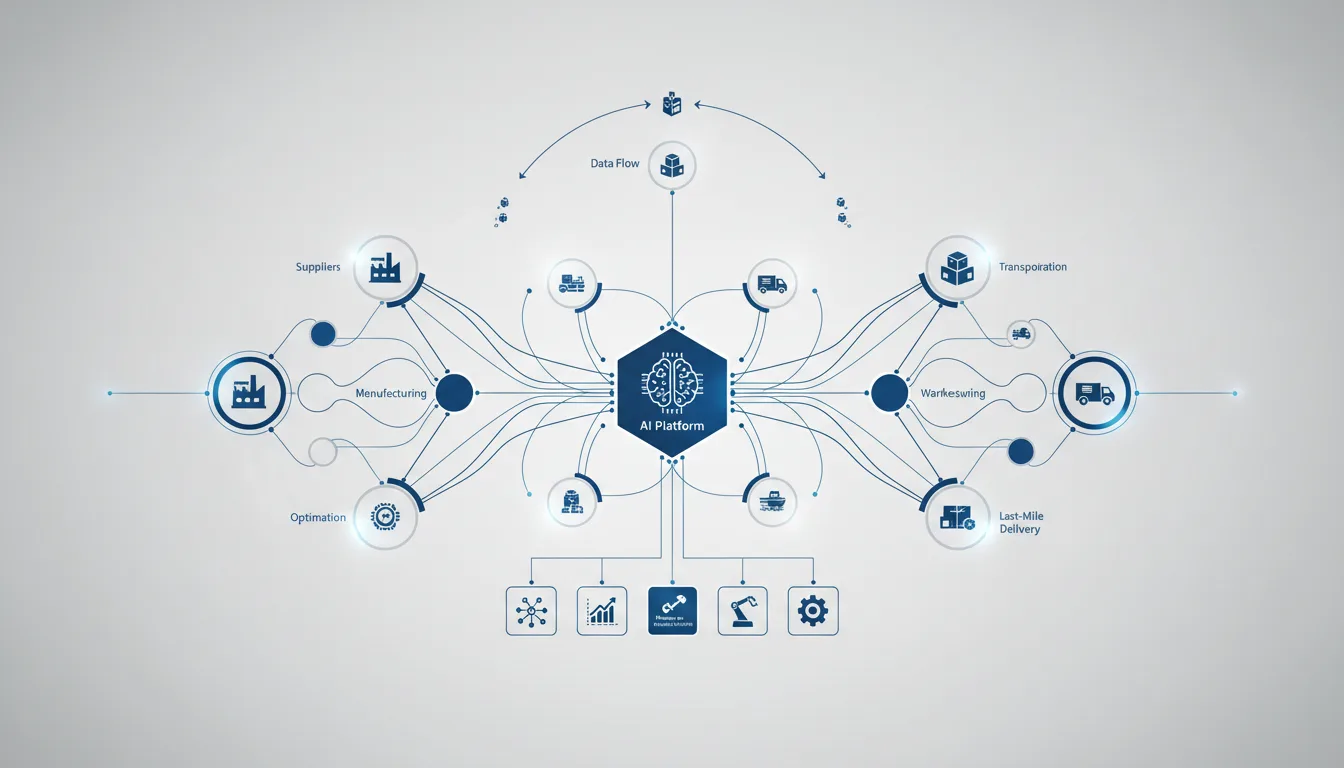
Artificial Intelligence (AI) is revolutionizing the logistics industry by optimizing operations, improving efficiency, and enhancing decision-making processes. AI technologies help in predictive analytics, inventory management, and demand forecasting, ultimately driving cost reductions and improving service levels.
Etymology and Origins
The term "Artificial Intelligence" was coined in 1956 by John McCarthy, who defined it as "the science and engineering of making intelligent machines." The roots of the term slightly predate its formal naming, with concepts appearing in early works of philosophers and mathematicians, notably Alan Turing who proposed that machines could simulate any human intelligence. Over the decades, AI has evolved from mere theoretical discussions to practical applications in various industries, including logistics. The first documented use of AI in logistics can be traced back to the late 1980s when companies began implementing rudimentary automated systems. As computational power and algorithms advanced, the capabilities of AI in logistics expanded significantly.
Historical Development
AI's integration into logistics began in earnest during the 1980s, coinciding with advancements in computer processing power that allowed for more complex algorithms. In the 1990s, supply chain management started adopting more sophisticated AI systems for inventory management and operational efficiency, leading to improvements in accuracy and reduced waste. Key milestones include:
- 1980s: Introduction of expert systems in warehousing functions, enhancing decision-making processes.
- 1997: IBM's Deep Blue defeated world chess champion Garry Kasparov, showcasing AI's capabilities and stimulating interest in AI technologies for business applications.
- 1990s: IBM’s development of AI solutions for production forecasting, which included tools that analyzed historical data to predict future demands.
- 2000s: Emergence of machine learning algorithms to enhance demand forecasting accuracy, allowing companies to optimize their inventory levels based on predicted trends.
- 2010s: Widespread adoption of AI-driven solutions across logistics operations, including autonomous vehicles and drones being utilized for deliveries, which represented a significant shift in logistics paradigms.
- 2020s: The continued integration of AI into logistics with advancements in predictive analytics and real-time data processing solidified AI's role in the future of supply chain management.
Core Concepts
Artificial Intelligence in logistics encompasses a variety of methodologies and technologies, including:
- Machine Learning: Algorithms that analyze vast data sets to improve predictions and automate repetitive tasks, crucial for demand forecasting.
- Robotics: Utilization of robots for inventory management and order fulfillment, transforming warehouse operations and reducing human error.
- Natural Language Processing (NLP): Enhances communication through AI-driven chatbots and virtual assistants in customer service, significantly improving response times and user experience.
- Data Analytics: Advanced analysis allows companies to derive actionable insights from their operations, enabling informed decision-making and strategy development. These core technologies collaborate to create a more streamlined and responsive logistics framework.
Industry Applications
AI's applications in logistics span multiple sectors, including:
- Retail: Automated inventory management systems such as mobile warehouse management solutions that utilize AI for real-time tracking and forecasting to enhance productivity.
- Manufacturing: Predictive maintenance to prevent equipment failures, leveraging AI analytics; companies such as Siemens and GE have implemented AI systems to mitigate downtime.
- Transportation: Route optimization tools that apply machine learning to reduce delivery times and costs while also improving customer satisfaction through timely deliveries.
Benefits and Advantages
Implementing AI in logistics offers significant advantages:
- Cost Efficiency: Reduced operational costs through optimized routing and inventory management, which can lead to savings of up to 20% in operational expenses.
- Enhanced Decision Making: Data-driven insights replace guesswork, leading to better resource allocation and strategic planning.
- Increased Flexibility: AI allows companies to respond quickly to market changes or disruptions in supply chains, promoting agility and resilience.
Challenges and Limitations
Despite its benefits, AI adoption in logistics faces challenges, such as:
- Data Quality: Poor quality or insufficient data can undermine AI effectiveness, resulting in inadequate outputs.
- Integration Issues: Existing legacy systems may complicate new AI implementations, requiring significant investments in upgrades.
- Skills Gap: There is often a scarcity of personnel trained in both AI technologies and logistics processes, creating a barrier to effective adoption.
Best Practices
To effectively implement AI in logistics, organizations should consider:
- Start Small: Begin with pilot projects that address specific issues before scaling, which mitigates risks associated with larger deployments.
- Focus on Quality Data: Invest in data collection and management to enhance AI outcomes and ensure accurate insights.
- Train Employees: Foster a culture of continuous learning to equip staff with AI and data analytics skills critical for success.
Future Trends
The future of AI in logistics is promising, with expected advancements including:
- Greater Automation: Autonomous delivery systems and drones are likely to become more prevalent, reshaping last-mile delivery dynamics.
- Predictive Supply Chain Management: Enhanced analytics tools predicting trends based on historical data, allowing for proactive stock management.
- Blockchain Integration: Combining AI with blockchain for improved transparency and traceability in the supply chain, providing greater security and reliability in transactions.
Related Concepts
AI in logistics interconnects with various logistics concepts such as order fulfillment and warehouse management. Understanding these interrelations is vital for grasping the full potential of AI applications.
Artificial Intelligence is set to transform the logistics industry further, promoting efficiency and adaptability in an ever-evolving marketplace.