Agile Management
Agile Management focuses on iterative development and flexibility in operations, enhancing responsiveness in supply chain and logistics sectors.
Updated
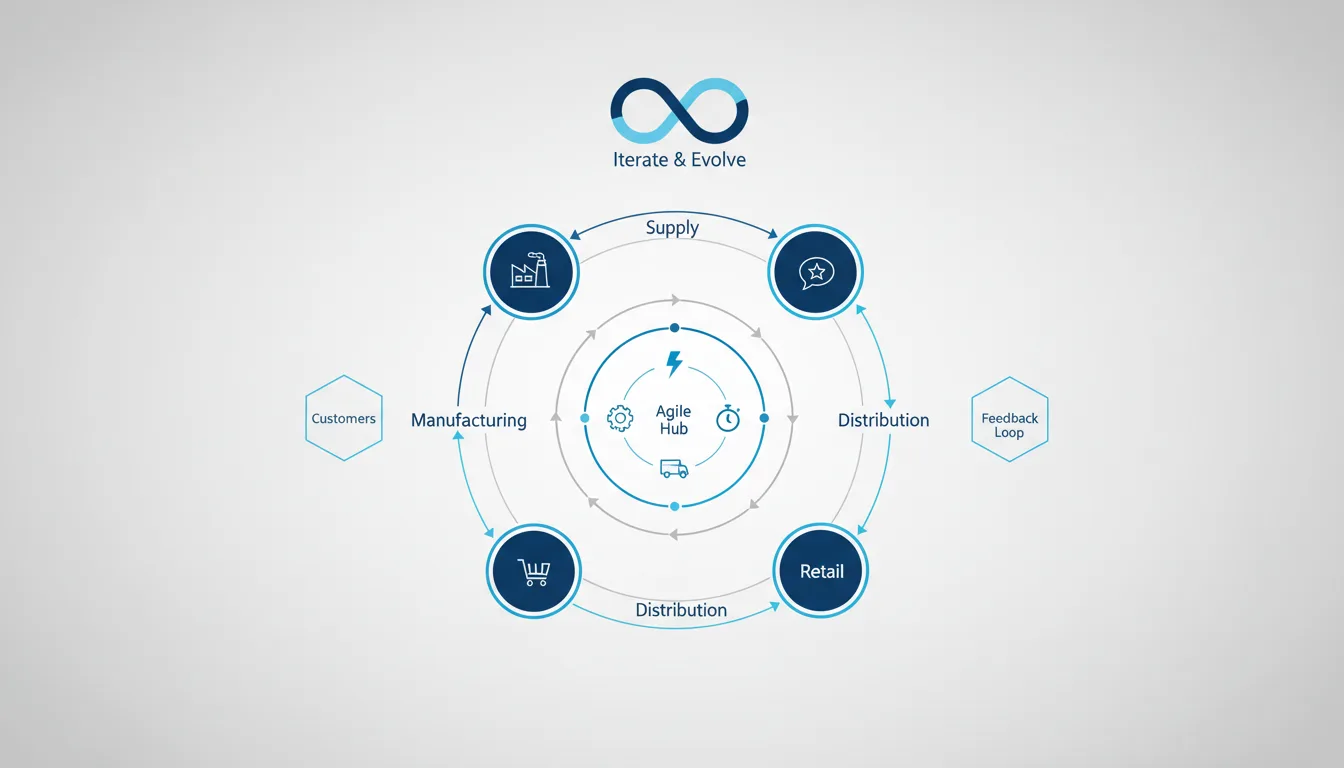
Agile Management
Overview
Agile Management is a methodology that emphasizes adaptability, collaboration, and iterative progress towards well-defined goals. Originally devised for software development, it has been extensively adopted in various fields, including logistics and supply chain management. Agile practices aim to improve processes by allowing organizations to respond swiftly to market changes and customer needs, maximizing efficiency and minimizing waste.
Etymology and Origins
The term 'Agile' derives from the Latin word agilis, meaning quick or nimble. The first documented usage of ‘Agile’ in business methodology appeared around the early 2000s, notably through the publication of the Agile Manifesto in 2001 by 17 software developers. This manifesto formally established the foundational principles of Agile Management, emphasizing customer collaboration, responsiveness to change, and valuing individuals and interactions over processes and tools. Over time, the term has evolved, influencing various management disciplines—including logistics—through its focus on flexibility and efficiency in processes.
Historical Development
The concept of Agile Management can be traced back to the Agile Manifesto in 2001. Its roots extend further into the principles of lean manufacturing that gained prominence in the 1980s, particularly through the practices employed by Toyota in their Just-In-Time (JIT) production system. Key figures in its development include:
- Jeff Sutherland and Ken Schwaber: Co-creators of Scrum, one of the most popular Agile frameworks—first introduced in a paper in 1995.
- Mary Poppendieck: Notable for applying Lean principles to software development through her influential book Lean Software Development: An Agile Toolkit published in 2003 (Amazon).
Major Milestones:
- 1980s: Emergence of lean principles in manufacturing, leading to JIT production.
- 1995: Publication of the Scrum framework, establishing key iterative processes.
- 2001: Publication of the Agile Manifesto, officially marking the birth of Agile Management as a philosophy.
- 2005: Establishment of the Agile Alliance, fostering community and collaboration among Agile practitioners.
- 2020s: Increased integration of technology, such as warehouse management systems, and the application of machine learning in Agile processes.
As Agile practices entered logistics, they increased focus on continuous improvement and stakeholder engagement. The adoption of Agile methods has complemented technological advancements, helping organizations streamline operations and adapt quickly to changing market conditions.
Core Concepts
At the heart of Agile Management is the commitment to iterative processes and quick adjustments based on feedback. Key principles include:
- Customer Collaboration: Engaging customers throughout the process to ensure the end product meets their needs.
- Iterative Development: Breaking work into small, manageable tasks that can be completed quickly.
- Continuous Improvement: Regularly assessing processes to identify areas for enhancement.
- Cross-Functional Teams: Encouraging collaboration among diverse expertise to address challenges effectively.
Types and Classifications
Agile Management encompasses various frameworks and practices, including:
- Scrum: Focuses on structured sprints and regular reviews to assess progress, widely used in project management across different sectors.
- Kanban: Visualizes workflow to optimize efficiency and minimize bottlenecks, effectively managing work in progress.
- Extreme Programming (XP): Emphasizes technical practices to improve software quality and responsiveness, ensuring high levels of customer satisfaction.
Industry Applications
Agile Management is increasingly utilized in logistics and supply chain management. Notable applications include:
- Supply Chain Flexibility: Companies can quickly adjust inventory levels and routes in response to demand fluctuations, leading to enhanced service levels.
- Project Management: Agile methodologies facilitate managing logistics projects, ensuring timely delivery and responsiveness to customer needs.
A prime example includes Zara, the fashion retail company, which uses Agile practices to rapidly respond to fashion trends, demonstrating real-time decision making in their logistics and supply chain operations (Harvard Business Review).
Benefits and Advantages
Organizations adopting Agile Management in logistics can experience numerous benefits, such as:
- Increased Efficiency: Streamlined processes lead to lower operational costs and faster delivery times, improving overall productivity.
- Greater Customer Satisfaction: Enhanced adaptability helps in meeting customer demands promptly, resulting in better retention rates.
- Improved Team Collaboration: Agile fosters open communication and teamwork among different departments, breaking down silos.
Challenges and Limitations
While Agile Management provides significant benefits, some challenges include:
- Cultural Resistance: Shifting from traditional management approaches to Agile can encounter resistance from teams accustomed to established processes.
- Lack of Understanding: Inadequate knowledge of Agile principles can hinder successful implementation.
- Measuring Success: Determining performance metrics in an Agile environment can be complex and require new approaches.
Best Practices
To effectively implement Agile Management in logistics:
- Promote a Culture of Agility: Encourage teams to embrace change and prioritize collaboration, fostering an open-minded culture.
- Use Technology: Implement systems like order management software that support Agile workflows and facilitate better coordination.
- Continual Learning: Adopt a mindset of ongoing learning and improvement, ensuring teams regularly assess their processes and outcomes, thus refining their operations.
Future Trends
The future of Agile Management in logistics seems promising, especially with developments in technology. Key trends include:
- Increased Automation: Automation tools will enhance Agile practices in inventory and order management cycles, optimizing responsiveness.
- Integration with AI: Artificial Intelligence may provide predictive capabilities, facilitating better decision-making in logistics planning and demand forecasting.
- Enhanced Collaboration Tools: Advancements in communication technologies will further streamline Agile processes, supporting remote and hybrid work environments.
Related Concepts
- Lean Management: Shares principles with Agile, emphasizing waste reduction and efficiency, fostering a smoother production flow.
- Just-In-Time (JIT): A strategy closely related to Agile that focuses on reducing flow times within production systems, aligning with customer demand.
In conclusion, Agile Management has transformed the logistics landscape, enabling organizations to thrive in an increasingly complex and dynamic environment. Its principles foster flexibility, collaboration, and efficiency, making it an essential approach for modern supply chain strategies.