Advanced Warehouse Management
A comprehensive guide to advanced warehouse management practices, technologies, and benefits for logistics professionals.
Updated
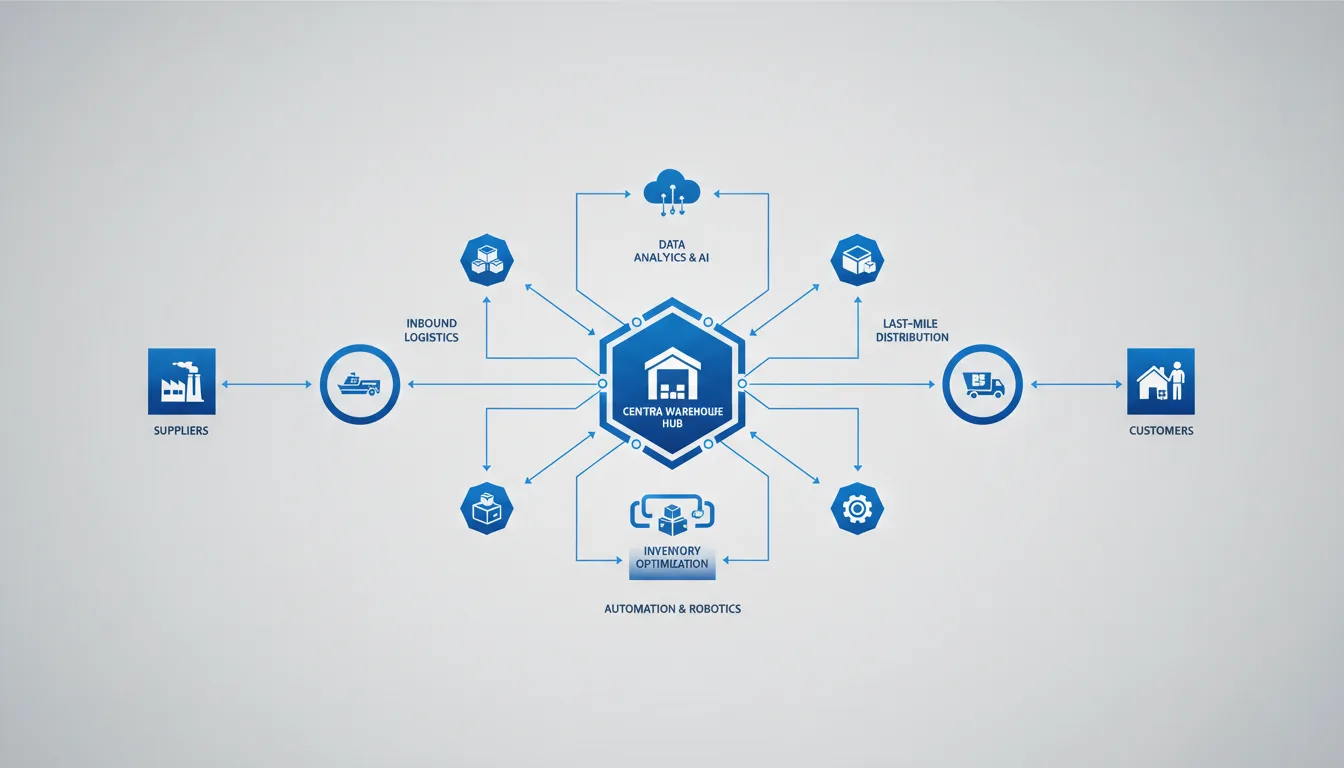
Advanced Warehouse Management
Overview
Advanced Warehouse Management (AWM) refers to a sophisticated paradigm of techniques, strategies, and technologies designed to optimize every facet of warehouse operations. Its primary goal is to significantly improve efficiency, enhance accuracy, and drastically reduce operational costs within the broader supply chain 8. In today's highly dynamic and competitive logistics landscape, characterized by surging e-commerce demands, labor shortages, and increasing customer expectations for rapid delivery, warehouses must leverage these advanced strategies to remain competitive and resilient. AWM goes beyond basic inventory tracking to encompass complex systems for real-time inventory management, automated order fulfillment, strategic warehouse layout optimization, and comprehensive labor management, facilitated by cutting-edge technologies like Warehouse Management Systems (WMS) and advanced automation tools.
Etymology and Origins
The term "warehouse" itself has deep historical roots. It is derived from Old English warhus, a compound of war (wares, goods) and hus (house) 9. This reflects its original function as a dedicated structure for storing commercial goods. Early forms of organized storage date back to ancient civilizations, with evidence of granaries and storehouses used by the Romans and Egyptians to manage agricultural surpluses and trade goods 10.
The concept of "management" in a business context gained prominence during the Industrial Revolution, emphasizing efficiency and control over resources and processes. Initially, warehouse operations were largely rudimentary, relying on manual records and physical inspection. The idea of "warehouse management" as a distinct discipline began to emerge in the early 20th century, influenced by the principles of scientific management pioneered by Frederick Winslow Taylor 11, which sought to optimize workflows and reduce waste in industrial settings. These principles, initially applied to manufacturing, gradually extended to logistics and storage.
The adjective "advanced" became relevant as technological advancements began to transform the basic warehousing function. The transition from simple storage to managed operations, and subsequently to advanced techniques, accelerated significantly from the mid-20th century onwards. The rise of computing power and automation in the 1970s and 80s truly necessitated and enabled the development of sophisticated methodologies and systems, leading to the coining and widespread adoption of terms like "Advanced Warehouse Management" to distinguish these technologically-driven and data-centric approaches from traditional, manual warehousing practices.
Historical Development
The evolution of warehouse management is a testament to continuous innovation driven by economic shifts, technological progress, and evolving customer demands. It can be outlined through several transformative milestones:
-
Pre-1950s: Manual & Mechanized Beginnings
Early warehouses were primarily manual operations. The primary innovations were structural (e.g., multi-story warehouses) and basic material handling equipment like hand trucks. Post-World War II, the widespread adoption of pallets and forklifts revolutionized materials handling, significantly increasing storage density and efficiency by enabling vertical storage and faster movement of goods 12. This era focused on basic mechanization and standardized unit loads. -
1960s - 1970s: Data Processing & Early Automation
The introduction of barcodes (specifically the Universal Product Code - UPC in 1973) marked the beginning of automated item identification and inventory tracking, dramatically enhancing accuracy and speed in stock management 13. The emergence of Material Requirements Planning (MRP) systems in manufacturing started to influence warehouse planning, linking production needs to inventory levels. Early minicomputer-based inventory control systems began to appear, offering rudimentary digital stock visibility. -
1980s: The Birth of WMS and JIT
The transition to computerized systems accelerated with the development of dedicated Warehouse Management Systems (WMS). These early WMS solutions, often custom-built, moved beyond simple inventory tracking to manage putaway, picking, and shipping processes in real-time. This era saw the foundational shift towards data-driven warehouse operations, paving the way for sophisticated systems like SkuSavvy's mobile WMS. The Just-in-Time (JIT) philosophy, pioneered by Toyota, emphasized minimizing inventory and waste, profoundly impacting warehouse design and operational strategies globally 14. -
1990s: ERP Integration and E-commerce Dawn
The rise of client-server computing and the internet catalyzed innovations in supply chain collaboration. WMS began to integrate more closely with other enterprise solutions, particularly Enterprise Resource Planning (ERP) systems, enabling a more holistic view of operations. The nascent growth of e-commerce introduced new pressures for faster, more accurate, and individualized order fulfillment, challenging traditional warehouse models. -
2000s: Advanced Automation and Global Supply Chains
Technologies such as Radio-Frequency Identification (RFID) became prevalent, offering even more precise, real-time tracking capabilities for inventory, further reducing human error and improving visibility 15. Voice picking and other pick-to-light/put-to-light systems gained traction, improving picking efficiency and accuracy. Globalization drove the need for more complex, interconnected warehouse networks. -
2010s: Cloud, Robotics, and Omnichannel
The introduction of cloud-based WMS solutions made advanced warehouse management more accessible and scalable for businesses of all sizes, reducing upfront IT investments and simplifying deployment 16. Robotics, including Automated Guided Vehicles (AGVs) and early Autonomous Mobile Robots (AMRs), began to enter warehouses for tasks like material transport and order picking. The omnichannel retail environment forced warehouses to handle diverse order types (e.g., store replenishment, direct-to-consumer, click-and-collect) from a single inventory pool, requiring highly flexible WMS and operational strategies. -
Present Day (2020s): AI, IoT, and Hyper-Automation
Advanced analytics, Artificial Intelligence (AI), and Machine Learning (ML) are integral to modern AWM, enabling predictive management, demand forecasting, optimal slotting, and streamlined operations 17. Internet of Things (IoT) devices provide real-time data from equipment, inventory, and environments, enhancing visibility and proactive maintenance. The focus is now on hyper-automation, integrating robotics, AI, and smart WMS to create highly adaptive, self-optimizing warehouse ecosystems capable of handling unprecedented complexity and variability.
Seminal publications like The Toyota Way by Jeffrey Liker (2004) and The Warehouse Management Handbook by Gwynne Richards (2011) have significantly influenced the understanding and practices of modern WMS and lean logistics.
Core Concepts
At its core, advanced warehouse management involves several key concepts that integrate technology, process, and people for optimal performance:
- Real-Time Inventory Management: Utilizing Visual Inventory Systems and IoT sensors to gain instant, accurate insights into stock levels, locations, and movements. This capability enables agile decision-making, minimizes stockouts, and reduces carrying costs by optimizing inventory levels 18.
- Automated Order Fulfillment: Implementing systems and workflows for highly efficient order processing, including sophisticated picking strategies (e.g., batch, wave, zone picking), automated sorting, and packing. This reduces delays, minimizes errors, and significantly boosts throughput.
- Warehouse Layout and Slotting Optimization: Strategically designing warehouse layouts to facilitate streamlined material flow from receiving to shipping. Slotting optimization — the strategic placement of inventory based on factors like velocity, size, and weight — is crucial for reducing travel time and improving picking efficiency, often using tools like bin packing visualizers 19.
- Cycle Counting and Inventory Audits: Moving beyond annual physical inventories, regular cycle counting methods enhance accuracy and inventory visibility by counting small sections of inventory frequently. This continuous process identifies discrepancies promptly, reducing disruptions and improving overall inventory data integrity.
- Workforce Optimization and Labor Management: Modern AWM leverages advanced tools to manage, schedule, and optimize warehouse labor. This includes task interleaving, performance tracking, and training to maximize employee productivity and engagement while minimizing labor costs. Effective labor management systems (LMS) integrate with WMS to assign tasks dynamically and provide real-time performance feedback 20.
Types and Classifications
Advanced warehouse management practices can be classified into various specialized operational models:
- Automated Warehouses: These facilities heavily utilize robotics (e.g., AS/RS - Automated Storage and Retrieval Systems, AMRs - Autonomous Mobile Robots), conveyor systems, and sortation equipment for tasks like picking, sorting, and material transport, significantly reducing manual labor and increasing speed 21.
- Cross-Docking Operations: A highly efficient method that minimizes storage time by transferring incoming goods directly to outbound shipping docks with minimal or no intermediate storage. This strategy, explored in depth in the Cross-Docking Guide, reduces handling, storage costs, and delivery times.
- Kitting and Assembly Warehouses: These operations involve combining multiple components into a single kit or performing light assembly within the warehouse environment. This value-added service, leveraging tools found in the Kitting Guide, streamlines production or fulfillment for specific customer orders.
- Cold Chain Warehouses: Specialized facilities designed to maintain specific temperature and humidity ranges for perishable goods (e.g., food, pharmaceuticals). AWM in these environments integrates environmental monitoring and stringent compliance protocols.
- Third-Party Logistics (3PL) and Fourth-Party Logistics (4PL) Warehouses: These outsourced operations manage warehousing and distribution for multiple clients. AWM solutions for 3PLs require multi-client capabilities, robust reporting, and seamless integration with various client systems.
Industry Applications
AWM is a critical enabler across a myriad of industries, each with unique demands:
- E-commerce: Essential for handling high volumes of small, individualized orders, requiring rapid order fulfillment, extensive SKU management, and efficient returns processing. AWM helps manage the complexity of omnichannel operations and fluctuating demand 22.
- Retail: Facilitates efficient stock management, store replenishment, and seasonal demand fluctuations. AWM supports inventory visibility across channels, crucial for initiatives like buy-online-pickup-in-store (BOPIS) and ship-from-store.
- Manufacturing: Coordinates the flow of raw materials, work-in-progress, and finished goods between production lines and storage. AWM minimizes downtime, optimizes inventory for production schedules, and supports lean manufacturing principles.
- Pharmaceuticals & Healthcare: Ensures strict compliance with regulatory standards (e.g., FDA, GDP) for product traceability, temperature control, and lot and expiration date management. AWM is crucial for maintaining product integrity and patient safety.
- Automotive: Manages vast numbers of spare parts and components, often with complex kitting requirements and global distribution networks. AWM ensures timely delivery to assembly plants or service centers.
Benefits and Advantages
The adoption of advanced warehouse management offers profound benefits, significantly impacting a business's bottom line and competitive standing:
- Improved Efficiency and Throughput: Automation and optimized processes can reduce the time taken for order processing, picking, and inventory movements by 25-50% 23. This directly translates to higher order throughput and faster delivery times.
- Enhanced Accuracy: Real-time inventory tracking and guided tasks minimize human errors, leading to near-perfect inventory accuracy. AWM practices significantly reduce the average order picking error rate to below 1%, reducing costly mis-shipments and returns 24.
- Cost Reduction: Lower operational costs are achieved through optimized labor utilization (e.g., through productivity tracking), reduced inventory holding costs, minimized waste, and efficient space utilization. Businesses can often see a significant ROI within 1-3 years of implementing AWM 25.
- Increased Customer Satisfaction: Faster, more accurate, and reliable order fulfillment directly leads to higher customer satisfaction and loyalty, which is paramount in today's consumer-driven market.
- Greater Agility and Resilience: AWM provides the flexibility to adapt to market changes, demand fluctuations, and supply chain disruptions. Its data-driven insights enable proactive responses and better risk management.
Technology and Tools
Numerous cutting-edge technologies enable advanced warehouse management, forming an integrated ecosystem:
- Warehouse Management Systems (WMS): The central nervous system of modern warehouses. Advanced WMS, like SkuSavvy's mobile-first platform, integrates various functions from receiving and putaway to picking, packing, and shipping. They orchestrate all warehouse activities, provide real-time visibility, and generate critical operational data.
- Automation Technologies: A broad category including:
- Robotics: Autonomous Mobile Robots (AMRs) for transport, robotic arms for picking and sorting, and Automated Storage and Retrieval Systems (AS/RS) for high-density storage and retrieval 26.
- Conveyor Systems and Sortation Equipment: For high-speed movement and sorting of goods.
- Automated Guided Vehicles (AGVs): Programmed to follow specific paths for material transport.
- Voice Picking and Pick-to-Light Systems: Guided picking technologies that improve accuracy and speed for human operators.
- Internet of Things (IoT): Sensors embedded in equipment, inventory, and facilities provide real-time data on asset health, environmental conditions (temperature, humidity), and inventory location, enabling proactive maintenance and improved decision-making 27.
- Advanced Analytics and Artificial Intelligence (AI): Using data to make predictive and prescriptive decisions. AI/ML algorithms optimize slotting, forecast demand, detect anomalies, and even guide automated purchase quantity recommendations. This transforms reactive management into proactive strategy.
- Barcode and RFID Technology: Fundamental for accurate and rapid identification and tracking of inventory throughout the warehouse and supply chain.
Future Trends
The future of AWM is being shaped by several transformative trends, promising even greater efficiency, intelligence, and sustainability:
- Artificial Intelligence and Machine Learning (AI/ML): Increasingly integrated into every aspect, from advanced demand forecasting and dynamic slotting to predictive maintenance for equipment and intelligent route optimization for robots. AI will drive self-optimizing warehouses capable of continuous learning and adaptation 22.
- Sustainability Practices: A growing focus on eco-friendly technologies and practices, including energy-efficient automation, optimized transportation routes, sustainable packaging, and waste reduction programs 28. Warehouses will play a key role in achieving broader corporate environmental goals.
- Blockchain Technology: Enhancing transparency and traceability across the entire supply chain, particularly critical in industries with stringent regulatory requirements like food safety and pharmaceuticals. Blockchain can provide an immutable record of product movement and authenticity 29.
- Collaborative Robotics (Cobots): Robots working alongside human employees, augmenting their capabilities rather than entirely replacing them. Cobots improve safety, reduce physical strain, and boost productivity by handling repetitive or strenuous tasks.
- Digital Twin Technology: Creating virtual replicas of physical warehouses, allowing for real-time monitoring, simulation of operational changes, and predictive analysis without disrupting live operations. This enables continuous optimization and risk mitigation.
- Hyper-Personalization and Micro-Fulfillment: As consumer expectations for individualized products and ultra-fast delivery grow, AWM will support highly localized micro-fulfillment centers and sophisticated kitting/assembly operations closer to the end customer.
Conclusion
As the logistics landscape continues its rapid evolution, advanced warehouse management remains a cornerstone of effective and resilient supply chain operations. By strategically leveraging cutting-edge technologies, continuously optimizing processes, and adopting agile best practices, businesses can not only enhance their warehouse efficiency and reduce costs but also significantly boost customer satisfaction and secure a competitive advantage in an increasingly complex global market. The ongoing integration of AI, automation, and sustainable practices ensures that AWM will continue to drive innovation and shape the future of logistics.
Sources
- Mobile WMS Overview
- Cycle Counting Guide
- Cross-Docking Guide
- Kidding Guide
- Order Fulfillment Guide
- Visual Inventory System
- Visual Warehouse Layout
- Supply Chain Management Review: The Case for Advanced Warehouse Management
- Online Etymology Dictionary: Warehouse
- A History of Logistics
- Principles of Scientific Management
- History of Material Handling
- The Barcode: A History
- The Toyota Way: 14 Management Principles from the World's Greatest Manufacturer
- RFID Journal: The History of RFID Technology
- Supply Chain Brain: Cloud WMS Takes Off
- Gartner: Predicts 2024: Supply Chain Technology - Artificial Intelligence
- Logistics Management: The Benefits of Real-Time Inventory Visibility
- Warehouse Management: A Complete Guide to Improving Efficiency and Minimizing Costs
- Supply Chain 24/7: The Role of Labor Management Systems in Modern Warehouses
- Modern Materials Handling: Automation's Role in Today's Warehouse
- Supply Chain Dive: E-commerce Drives Warehouse Automation Boom
- Warehouse & Logistics News: WMS Benefits and ROI
- MHI Annual Industry Report: Accelerating Change - A Vision for the Digital Supply Chain
- SkuSavvy: How To Calculate ROI on Shopify Inventory Management App
- Robotics Business Review: Warehouse Automation Market Soaring
- Forbes: How IoT Is Changing Supply Chains
- Council of Supply Chain Management Professionals (CSCMP): Sustainability in Logistics
- Deloitte: Blockchain in Supply Chain Management
- SkuSavvy: Employee Management
- SkuSavvy: Lots & Expiration Dates
- SkuSavvy: Automated Purchase Quantity
- SkuSavvy: Workflows Overview
- SkuSavvy: Bin Packing Visualizer