Overview
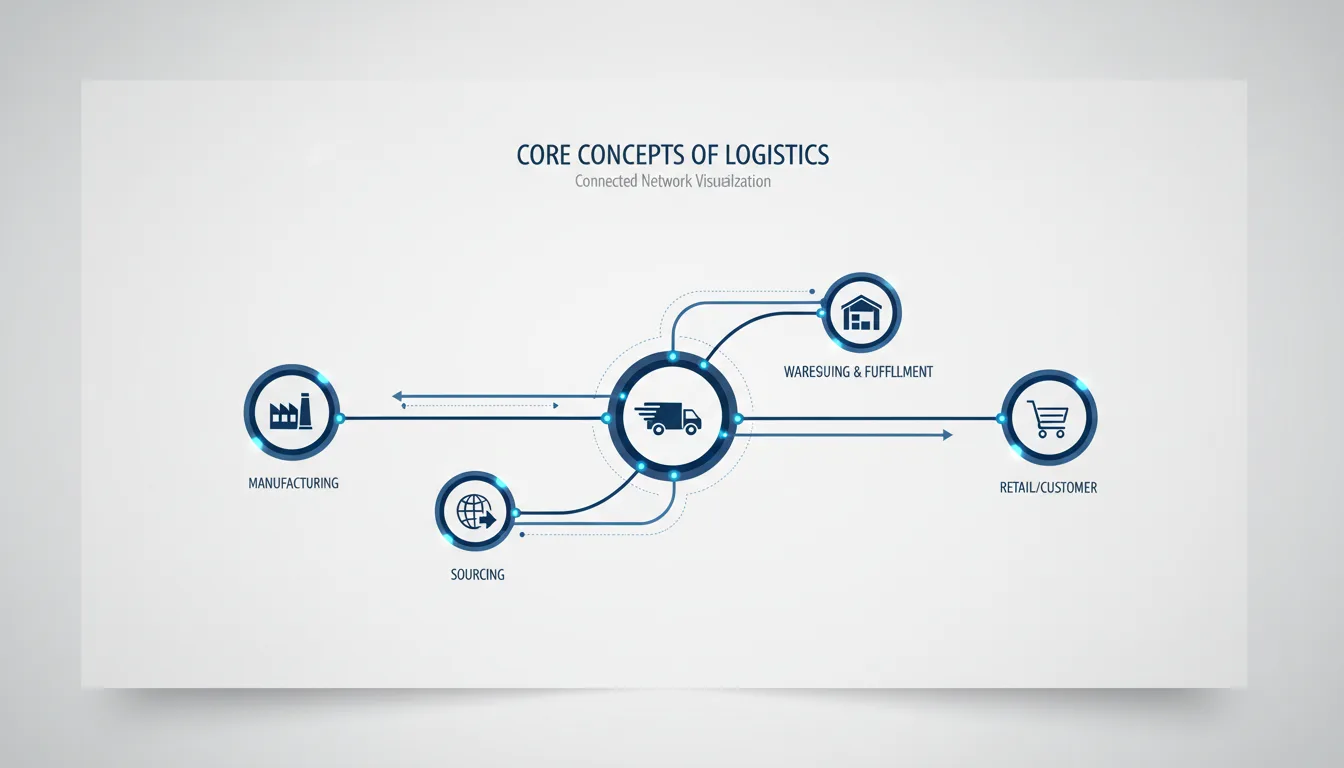
Logistics is a comprehensive field involving the strategic management of the flow of goods from origin to destination. It encompasses various critical elements such as transportation, warehousing, inventory management, and order fulfillment. The primary purpose of logistics is to ensure that the right product reaches the right place at the right time, in the right condition, and at the right cost, ultimately enhancing customer satisfaction and operational efficiency. Efficient logistics operations can significantly reduce costs and improve service levels in supply chain management, making it a fundamental concept for professionals across diverse industries. It's often seen as the execution arm of the broader supply chain strategy.
Etymology and Origins
The term "logistics" has a rich history, primarily rooted in military applications. It is derived from the Ancient Greek "logistikos", meaning skilled in calculating or reckoning, and later evolved through the French word "logistique" in the 17th and 18th centuries. Its modern military usage is often attributed to the Franco-Swiss general and military theorist Antoine-Henri Jomini, who, in his 1838 work Précis de l'Art de la Guerre (The Art of War), defined it as "the practical art of moving armies," encompassing supply, quartering, and transportation.
The transition of "logistics" from a purely military term to a commercial and industrial concept began to emerge in the mid-20th century, particularly after World War II. As industries scaled and globalized, the complex challenges of wartime supply chains found parallels in managing large-scale commercial operations. This evolution reflected the increasing complexity of supply chains and the growing need for coordinated operations in various industries. Early commercial logistics focused on "physical distribution" before broadening to encompass a more integrated view of the supply chain.
Historical Development
The practice of logistics has undergone profound transformations, evolving from basic necessity to a sophisticated strategic discipline:
- Ancient & Pre-20th Century: Early forms of logistics were crucial for the sustainability of ancient civilizations and empires. The Roman Empire's extensive road network and supply lines, or the intricate trade routes like the Silk Road, demonstrate early capabilities in moving goods and resources over vast distances. Basic transportation methods, primarily using horses, rudimentary carts, and waterways, were later supplemented by canals and railroads for trade and military movements.
- Early 20th Century (1900s-1940s): The industrial revolution brought mass production, which necessitated more organized material handling and distribution. The introduction of motor vehicles and improved road networks in the 1920s-1930s began to fundamentally change logistics, enabling faster and more flexible delivery. World War II served as a crucible for modern logistics, where necessity drove immense innovation in planning, coordination, and execution of complex global supply chains. Leaders like General Dwight D. Eisenhower famously stated that "The actual problems of battle are simple. They are food, water, ammunition, and transportation," underscoring the strategic importance of efficient logistics.
- Mid-20th Century (1950s-1970s): This era saw the conceptualization of "physical distribution" as a distinct business function, focusing on the outbound movement of finished goods. The rise of containerization in the 1950s, pioneered by Malcom McLean, revolutionized global shipping by standardizing cargo units, dramatically improving efficiency and reducing costs. Simultaneously, early technological advancements like barcodes and rudimentary mainframe computers began to influence inventory tracking and operational planning. The development of Operations Research during WWII led to quantitative methods for optimizing logistical problems, forming the bedrock for future advancements.
- Late 20th Century (1980s-1990s): This period witnessed the emergence of key management philosophies that profoundly impacted logistics. Just-In-Time (JIT) manufacturing, popularized by Toyota, emphasized minimizing inventory and receiving goods only as needed, pushing logistics towards greater precision and responsiveness. Material Requirements Planning (MRP) and later Manufacturing Resource Planning (MRP II) systems became widespread, integrating production planning with inventory and scheduling. The broader concept of Supply Chain Management (SCM) also gained prominence, positioning logistics as a critical component within an interconnected network of organizations. The advent of personal computers and early enterprise software facilitated more sophisticated planning and control.
- 21st Century (2000s-Present): The digital revolution and the rapid expansion of e-commerce have reshaped logistics into a highly dynamic and technology-driven field. The adoption of advanced software systems for inventory management, order fulfillment, and supply chain visibility became imperative. Modern Warehouse Management Systems (WMS) and Transportation Management Systems (TMS) became standard. The integration of technology like RFID for real-time tracking, Artificial Intelligence (AI) for predictive analytics, and the Internet of Things (IoT) for asset monitoring continues to drive innovation, enabling more agile, efficient, and data-driven logistical operations. Sustainability and resilience have also become central concerns.
Core Concepts
Key concepts in logistics form the operational backbone of any supply chain:
- Transportation: The physical movement of goods via various modes such as road, rail, air, sea, and pipeline. Effective transportation management involves selecting optimal routes, carriers, and modes to minimize costs and ensure timely, reliable deliveries. This often requires complex network optimization and freight consolidation strategies.
- Warehousing: Involves the strategic storage, handling, and distribution of goods in a physical location. Modern warehousing focuses on maximizing space utilization, improving pick accuracy, and accelerating throughput. Techniques such as cross-docking, which minimizes storage time by directly transferring incoming goods to outbound shipments, are crucial for efficiency. Warehouse layout optimization and efficient material handling systems are also key.
- Inventory Management: The process of overseeing and controlling the stock of goods. This includes forecasting demand, optimizing stock levels, managing replenishment, and ensuring efficient warehouse layout designs. Utilizing systems like a visual inventory management system provides real-time visibility and helps prevent stockouts or overstock situations. Strategies like cycle counting ensure inventory accuracy.
- Order Fulfillment: Encompasses all processes from the moment an order is received until it is delivered to the customer. This complex process includes order processing, picking, packing, shipping, and delivery. Tools like pick, pack, ship software and mobile order fulfillment solutions significantly enhance speed, accuracy, and customer satisfaction.
Types and Classifications
Logistics can be classified into various types based on the direction of flow and specific functions:
- Inbound Logistics: Focuses on the efficient transportation, storage, and receiving of incoming raw materials, components, and supplies from suppliers to the production or storage facility. Its goal is to ensure a smooth flow of inputs to avoid production delays.
- Outbound Logistics: Relates to the processes involved in storing, moving, and delivering finished products from the end of the production line or warehouse to the end customer. This includes order processing, packaging, shipping, and distribution.
- Reverse Logistics: Deals with the processes for returning goods from the customer back through the supply chain for reasons such as returns, repairs, recycling, or disposal. It aims to recapture value or ensure proper disposal, often involving complex sorting and handling.
- Third-Party Logistics (3PL): Involves outsourcing logistics functions to specialized external providers. A 3PL company can manage warehousing, transportation, and other logistical services, allowing the client company to focus on its core competencies.
- Fourth-Party Logistics (4PL): Acts as a single point of contact for the client, managing multiple 3PLs and other service providers, often overseeing the entire supply chain and acting as a strategic integrator and orchestrator.
Industry Applications
Logistics is an indispensable function across virtually every industry:
- Retail: Companies utilize sophisticated logistics networks to manage complex supply chains, from sourcing products globally to ensuring rapid last-mile delivery. For example, e-commerce giants rely on highly optimized fulfillment centers and delivery networks to meet customer expectations for fast and free shipping, often utilizing Shopify WMS integrations to manage inventory across multiple sales channels.
- Manufacturing: Efficient inbound logistics ensures the timely supply of raw materials and components needed for production, minimizing downtime and supporting lean manufacturing principles. Outbound logistics then handles the distribution of finished goods to wholesalers, retailers, or direct to consumers.
- Healthcare: Logistics management is critical for ensuring that essential medical supplies, pharmaceuticals, and equipment are available where and when needed, from hospitals to emergency response units. The timely and temperature-controlled transport of vaccines, for instance, highlights its life-saving importance.
- Automotive: Involves a highly complex global supply chain, where logistics manages the flow of thousands of parts from numerous suppliers to assembly plants and then distributes finished vehicles to dealerships worldwide. Just-in-Time principles are heavily applied here.
- Food and Beverage: Requires specialized cold chain logistics to maintain product freshness and safety from farm to fork, managing perishables with strict temperature controls and rapid delivery schedules.
Benefits and Advantages
Implementing effective logistics practices yields substantial benefits, directly impacting a company's bottom line and competitive standing:
- Cost Reduction: Optimized routing, efficient warehousing, and improved inventory management significantly cut operational costs related to transportation, storage, and waste. For instance, automated purchase quantity can reduce holding costs.
- Increased Efficiency: Streamlining logistics processes, often through workflow automation and advanced WMS, enhances overall productivity, reduces lead times, and improves resource utilization.
- Improved Customer Satisfaction: Delivering the right products on time, in perfect condition, and with transparent tracking cultivates customer loyalty and strengthens brand reputation. This is paramount in today's competitive market.
- Enhanced Competitiveness: Companies with superior logistics capabilities can offer better service, faster delivery, and more competitive pricing, gaining a significant edge in the marketplace.
- Better Supply Chain Resilience: Well-designed logistics systems incorporate contingency planning and diversification, making the supply chain more robust against disruptions.
Challenges and Limitations
The logistics industry faces numerous complex challenges that require constant adaptation and innovation:
- Supply Chain Disruptions: Events like natural disasters, geopolitical conflicts, pandemics, or port congestions can severely impact logistics flows, causing delays and stockouts. The COVID-19 pandemic starkly highlighted the fragility of global supply chains.
- Rising Costs: Fluctuating fuel prices, increasing labor costs (especially for skilled drivers and warehouse staff), and rising tariffs can significantly squeeze profit margins for logistics operators and manufacturers.
- Regulatory Compliance: Navigating a labyrinth of customs regulations, international trade laws, and environmental policies across different regions and countries can complicate global logistics operations and increase administrative burdens.
- Labor Shortages: A persistent challenge in many regions, particularly for truck drivers and warehouse workers, impacting capacity and increasing labor costs.
- Technological Adoption: While technology offers solutions, the initial investment, integration complexity, and the need for skilled personnel can be significant barriers for some companies.
Best Practices
To address challenges and continuously enhance logistics operations, companies can adopt the following best practices:
- Invest in Technology: Leveraging state-of-the-art logistics software, such as warehouse management systems (WMS), order management systems (OMS), and transportation management systems (TMS), can automate processes, provide real-time visibility, and optimize decision-making. Tools like a visual warehouse layout preview aid in strategic planning.
- Continuous Improvement: Regularly assess logistics strategies, processes, and performance metrics (e.g., on-time delivery rates, inventory turnover) to identify areas for enhancement and implement Lean or Six Sigma methodologies.
- Collaborate with Suppliers and Partners: Building strong, transparent relationships with suppliers, carriers, and 3PLs enhances communication, improves forecasting accuracy, and fosters a more resilient and efficient overall supply chain.
- Optimize Network Design: Periodically review and adjust warehouse locations, distribution centers, and transportation routes to adapt to changing market demands, customer locations, and cost structures.
- Embrace Sustainability: Implement eco-friendly practices such as optimizing delivery routes to reduce fuel consumption, using electric vehicles, minimizing packaging waste, and investing in green warehousing solutions to reduce environmental impact.
Future Trends
The logistics industry is undergoing a rapid evolution, driven by technological advancements and shifting global dynamics:
- Automation and Robotics: The adoption of robotics in warehouses for picking, packing, and sorting, alongside autonomous vehicles for transportation, is increasing efficiency, accuracy, and reducing labor dependency.
- Artificial Intelligence (AI) and Machine Learning (ML): These technologies are revolutionizing demand forecasting, route optimization, predictive maintenance for fleets, and risk management by analyzing vast datasets to identify patterns and make intelligent recommendations.
- Internet of Things (IoT): IoT sensors provide real-time tracking of goods, environmental conditions (e.g., temperature for perishables), and asset utilization, enabling proactive management and enhanced visibility across the supply chain.
- Sustainability and Green Logistics: There is a growing imperative to reduce the carbon footprint of logistics operations through greener practices, including electric vehicles, sustainable packaging, and optimized urban logistics planning.
- E-commerce Growth and Last-Mile Delivery: The exponential rise of online shopping continues to shape logistics practices, with an intensified focus on speedy, cost-effective, and flexible last-mile delivery solutions, often involving drone delivery or micro-fulfillment centers.
- Blockchain Technology: Offers potential for enhanced transparency, traceability, and security in supply chain transactions, particularly for verifying origin and combating counterfeiting.
Related Concepts
Understanding logistics also involves familiarity with interconnected concepts such as:
- Supply Chain Management (SCM): The broader strategic umbrella under which logistics operates, encompassing the coordination and management of all activities involved in sourcing, procurement, conversion, and logistics management. Logistics is often considered a critical component of SCM.
- Inventory Control: A subset of inventory management focused specifically on the processes and techniques for regulating inventory levels, such as setting reorder points and safety stock levels.
- Distribution Networks: The entire system of facilities (warehouses, distribution centers, cross-dock facilities) and transportation links used to move goods from producers to customers.
- Operations Management: The overarching management of processes and systems involved in producing and delivering goods and services. Logistics is a specialized area within operations management.