Overview
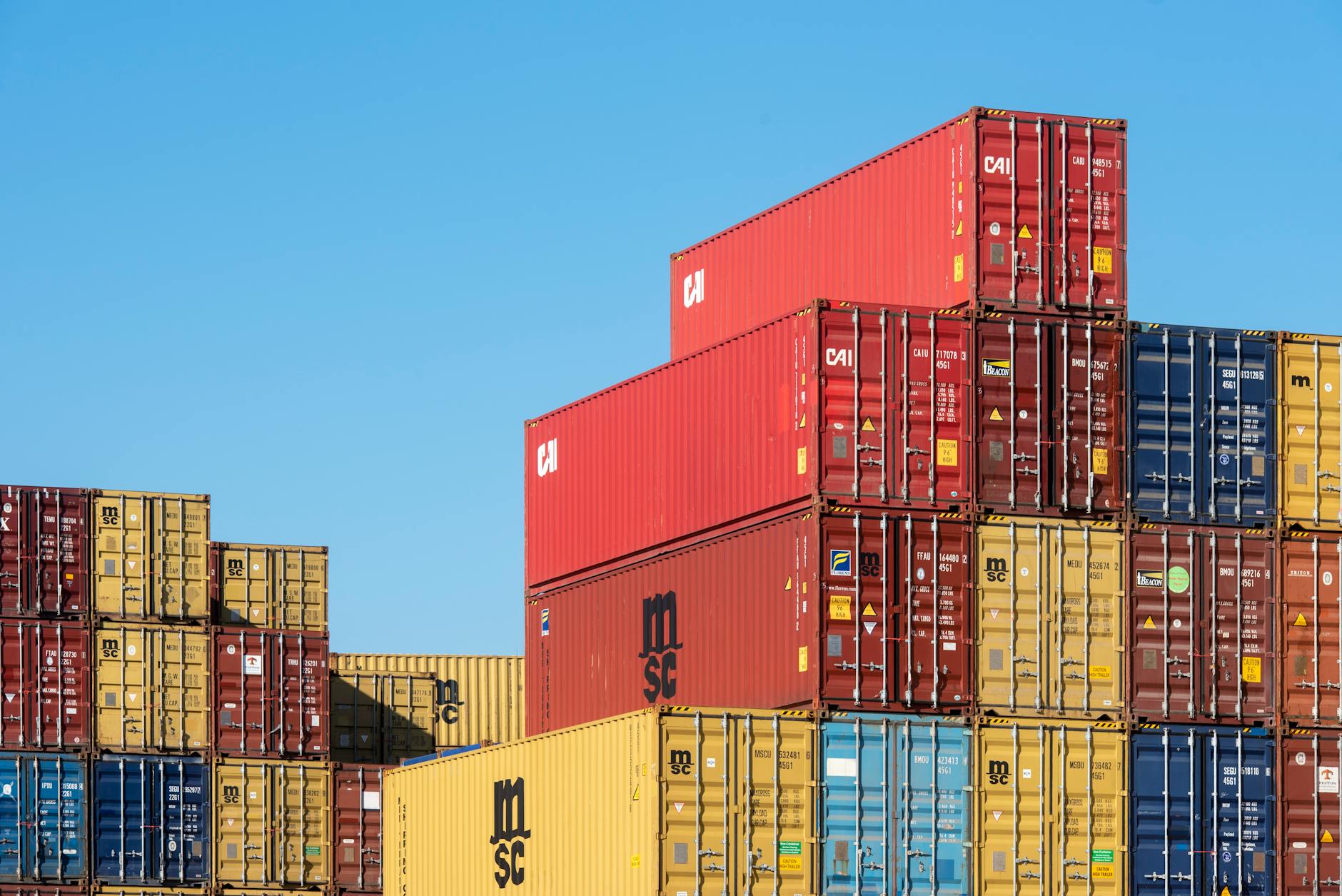
Container imbalance is a mismatch between the availability of shipping containers and demand for them at particular locations, times, or equipment types. A port receiving more loaded imports than it dispatches as exports may accumulate empty containers, while an export-oriented location may face shortages. The mismatch is a recurring feature of containerized trade and can be intensified by disruptions, congestion, and seasonal demand.
Imbalance affects ocean carriers, leasing companies, freight forwarders, terminals, inland transport providers, and cargo owners. Managing it requires both physical repositioning and information sharing. UNCTAD’s review of maritime transport describes how disruptions to shipping and logistics can affect container availability and freight costs. At the cargo-owner level, purchase order management can help coordinate expected goods flows, although it does not control a carrier’s container fleet or determine where empty equipment is positioned.
Etymology and Origins
The term combines container, the standardized reusable unit used to carry goods, with imbalance, a lack of correspondence between supply and demand. In logistics, it commonly refers to a geographic or temporal mismatch in equipment, rather than a container being physically unstable or improperly loaded. It is also distinct from a trade imbalance: a difference in the value of trade does not necessarily produce the same difference in container numbers, because equipment demand depends on cargo volume, routing, and container type.
The operational problem developed alongside the expansion of containerization: reusable boxes had to be available where outbound cargo was booked, not merely where inbound cargo had arrived. A definitive first published use of the phrase “container imbalance” is not established here. By 1993, researchers were explicitly studying dynamic and stochastic allocation of empty containers, treating equipment availability as a network-planning problem. Later industry discussion also connected the problem to maritime transport disruptions.
Historical Development
- 1950s–1960s: In the United States, trucking entrepreneur Malcom McLean helped develop intermodal container shipping. The Ideal X carried containers on a voyage from Newark to Houston in 1956. As container networks expanded, operators had to arrange the return or onward use of equipment after delivery. Containerization’s early development established the basis for this recurring equipment-management task.
- 1960s–1970s: Standardization of container dimensions and handling interfaces supported interchange among ships, trucks, and trains. ISO 668 specifies external dimensions and ratings for Series 1 freight containers; current editions continue that dimensional framework. Larger international networks increased the importance of coordinating equipment across ports and inland terminals. The 1972 International Convention for Safe Containers later set internationally accepted safety requirements for containers in transport, including approval and maintenance obligations relevant to whether a box can remain in service.
- 1980s–2000s: Growth in global container trade and computerized booking, inventory, and transport systems made fleet-wide planning more feasible. Electronic records supplemented manual checks, although equipment availability still depended on physical transport and depot operations. In a 1993 operations-research paper, Teodor Gabriel Crainic, Michel Gendreau, and Pierre Dejax examined empty-container allocation under changing and uncertain conditions.
- 2010s–2020s: Digital tracking and standardized data exchange developed alongside continuing reliance on carrier and terminal systems. The Digital Container Shipping Association’s track-and-trace standards address consistent exchange of shipment-event information. During the COVID-19 disruption, congestion and changes in demand highlighted how delayed container circulation could compound equipment shortages, as documented in UNCTAD’s 2021 review.
Core Concepts
A container becomes available for another shipment only after a sequence that may include vessel discharge, inland delivery, unloading, empty return, inspection, and any necessary repair. Delays at any stage extend the equipment cycle. Shipment-event standards can help parties exchange information about movements, but a tracking event alone does not guarantee that a particular box is suitable or immediately available for a booking. Continued use in international transport also depends on meeting applicable safety and maintenance rules under the CSC framework.
A simplified equipment balance for one location and period is:
Closing stock = opening stock + empty arrivals + containers released after imports − containers supplied to exports − empty departures − removals from service.
This is a balance of usable, available equipment, not every box physically present. To avoid double counting, record an import release or empty arrival only when it enters the defined available stock, and add repaired containers returning to service if applicable. The calculation must use consistent units and boundaries. A twenty-foot equivalent unit (TEU) measures capacity: one 20-foot container is generally one TEU and one 40-foot container two TEU, consistent with the external lengths specified for common Series 1 boxes in ISO 668. Counts in TEU can conceal shortages of a specific size or type. A refrigerated container, for example, is not interchangeable with a standard dry container, and a damaged box may be unavailable despite appearing in a physical count.
For example, suppose a depot begins a week with 100 usable 40-foot dry containers, receives 40 empty units, releases 80 from completed imports, supplies 150 to exporters, and sends 20 elsewhere. With no removals from service, it closes with 50 units (100 + 40 + 80 − 150 − 20). If the following week’s expected demand exceeds anticipated supply, the operator may seek inbound empties, alternative equipment, or different booking arrangements. Warehouse receiving and purchase-order records can contribute to a cargo owner’s planning of inbound flows, but they are not a substitute for the carrier’s equipment inventory.
Causes and Types of Imbalance
- Structural geographic imbalance: Persistent differences in loaded import and export volumes create recurring surpluses in some areas and deficits in others. The relationship depends on cargo volumes, equipment requirements, and routing—not simply the monetary value of trade.
- Temporal imbalance: Harvests, retail peaks, holidays, and sudden demand changes can create shortages even where annual flows are relatively balanced.
- Operational imbalance: Congestion, inland transport shortages, long unloading times, depot restrictions, and vessel schedule disruptions can keep equipment from reaching its next user on time. UNCTAD’s 2021 review discusses the effects of pandemic-era disruption on maritime supply chains.
- Equipment-specific imbalance: A location may have empty containers but lack the required size, condition, or specialized equipment, such as reefers. Dimensional classes are not a full description of interchangeability; ISO 668 covers external dimensions and ratings, not cargo-system compatibility.
- Inland–port imbalance: Containers may be concentrated inland while demand or empty-repositioning capacity is at a port, or vice versa. The World Bank’s Container Port Performance Index provides a port-performance perspective, though port performance alone does not measure container imbalance.
Management and Operational Responses
The principal response is empty repositioning: moving containers without cargo from a surplus location to a deficit location by vessel, rail, truck, or barge. Operators compare the cost and transit time of repositioning with the expected value of meeting future bookings. Other responses include leasing equipment, modifying allocation plans, using compatible alternative sizes where commercially acceptable, and matching an import container with a nearby export movement—a practice often called a street turn or container triangulation. Such reuse depends on the equipment owner’s authorization, condition requirements, and local arrangements.
Forecasting should distinguish confirmed bookings from estimates and account for container type, expected release date, depot capacity, maintenance, and inland transit time. The empty-container allocation literature highlights the need to plan across locations and periods under uncertainty. In practice, compare a baseline forecast with disruption scenarios and confirm that proposed moves can arrive before the relevant booking dates.
Standardized track-and-trace data can improve visibility across organizations when participants exchange timely, consistent events. Container identification also matters when reconciling records: the Bureau International des Containers’ BIC code system provides a standardized owner-code component of container identification. For importers and exporters, purchase order management and warehouse receiving workflows can support communication of expected cargo readiness and unloading schedules. Those records do not authorize street turns or move carrier-owned equipment.
Illustrative response: If an inland depot expects an export shortage next week, a planner can compare the arrival dates and costs of repositioned empties with expected import releases. A nearby street turn may be an alternative if the owner authorizes it and the box meets the exporter’s specifications. The choice should account for timing and handling costs rather than proximity alone; the example illustrates the allocation trade-offs studied in empty-container planning research.
Costs, Measures, and Best Practices
Imbalance can produce empty transport costs, storage expenses, missed export bookings, longer lead times, and inefficient use of equipment. Empty moves also consume transport capacity and generate emissions. Congestion and delayed circulation can increase exposure to charges, although the applicability of a particular charge depends on the contract, circumstances, and law. In the United States, the Federal Maritime Commission’s demurrage and detention billing requirements, published on 26 February 2024, address billing practices; they do not eliminate the underlying equipment mismatch.
Useful measures include:
- Empty repositioning volume and cost: Empty movements by route, mode, and equipment type, alongside associated transport and handling costs.
- Equipment availability: Usable containers available against forecast demand at a specified place and date.
- Container cycle time: Time between successive availability points, with separate measures for terminal, inland, customer, and depot stages.
- Forecast error and missed bookings: Differences between expected and actual demand, and bookings not served because suitable equipment was unavailable.
Best practice is to define each measure’s location, period, equipment category, and unit consistently; reconcile physical and system inventories; and share forecasts early with carriers and inland providers. Separate confirmed releases from estimated releases, and review exceptions such as damaged units or overdue returns before committing equipment to a booking. Cargo owners can also reduce avoidable delays through timely unloading and accurate receiving information. Digital event standards and warehouse receiving records support different parts of that process, but neither removes the need for physical capacity or coordination.