Overview
Automation in logistics refers to the implementation of various technologies and processes aimed at optimizing logistics operations, improving efficiency, reducing costs, and enhancing strategic decision-making. Its significance lies in transforming traditional logistical workflows by integrating advanced technology like robotics, artificial intelligence (AI), and automated materials handling systems. Through automation, companies can streamline operations, enhance accuracy, improve customer satisfaction, and gain a competitive edge in increasingly complex global supply chains.
Etymology and Origins
The term "automation" has deep linguistic roots, deriving from the ancient Greek word 'automatos' (\u03B1\u03BF\u03C4\u03B1\u03C4\u03BF\u03C2), meaning 'self-acting' or 'self-moving' [7]. While the concept of self-moving devices can be traced back to ancient automata, the modern industrial usage of the term emerged in the mid-20th century. Its first documented usage is often attributed to D. S. Harder, an engineering manager at Ford Motor Company, around 1946. Harder coined the term to describe the automatic handling of parts between processing steps in Ford's engine plants [8].
Around the same time, mathematician Norbert Wiener further popularized the concept with his work on "cybernetics," the study of control and communication in animals and machines, which laid theoretical groundwork for feedback loops crucial to automated systems [9]. Over time, the term evolved from describing purely mechanical self-operation to encompassing integrated systems that leverage electronics, computers, and software to perform tasks with minimal human intervention across various sectors, including the intricate operations of logistics and supply chain management.
Historical Development
Automation in logistics began gaining traction in the early 20th century, building on principles of industrial efficiency. The introduction of assembly line techniques by Henry Ford in the 1910s, though not fully automated, laid the groundwork for systematic process flow and material handling that would later be automated.
Significant milestones and technological advancements include:
- Early 20th Century (1900s-1940s): The primary focus was on mechanization through conveyors, chutes, and early forklifts, aimed at speeding up manual processes in factories and warehouses. Frederick Winslow Taylor's principles of scientific management also influenced process optimization [10].
- 1950s: Computerization and Early Data Processing: The incorporation of Electronic Data Processing (EDP) and early computer technology began to revolutionize inventory management. Punch cards and magnetic tape systems allowed for rudimentary tracking and analysis of stock levels, replacing laborious manual record-keeping [11].
- 1960s: Barcoding and Automated Storage and Retrieval Systems (AS/RS): The development of barcoding systems, notably the Universal Product Code (UPC), began in the late 1960s, enabling faster and more accurate data capture. Simultaneously, early Automated Storage and Retrieval Systems (AS/RS) were introduced, using mechanized cranes to store and retrieve pallets or containers in high-density rack structures [12].
- 1970s: Material Requirements Planning (MRP): The advent of Material Requirements Planning (MRP) systems, pioneered by companies like IBM, allowed manufacturers to plan production based on demand, leading to more efficient raw material procurement and inventory management. This was a critical step towards integrated logistics planning [13].
- 1980s: Robotics and Just-in-Time (JIT): Industrial robotics began to make inroads into warehouses, albeit in limited, repetitive tasks like palletizing. The adoption of Just-in-Time (JIT) manufacturing principles, largely influenced by Toyota's production system, emphasized minimizing inventory and optimizing flow, driving the need for more responsive and automated material handling [14].
- 1990s: Warehouse Management Systems (WMS) and EDI: The proliferation of personal computers and networking capabilities led to the widespread adoption of sophisticated Warehouse Management Systems (WMS). These systems, like SkuSavvy's Mobile WMS Overview, facilitated real-time inventory tracking, optimized storage locations, and directed picking tasks. Electronic Data Interchange (EDI) also became crucial for seamless information exchange between trading partners.
- 2000s: E-commerce Boom and Advanced Automation: The explosive growth of e-commerce necessitated faster fulfillment and higher throughput. This era saw the implementation of more advanced Automated Guided Vehicles (AGVs), Radio Frequency Identification (RFID) for enhanced tracking, and more sophisticated pick-to-light/voice systems. Cloud computing began to emerge as a viable platform for logistics software.
- 2010s-Present: AI, IoT, and Collaborative Robotics: Modern automation practices are characterized by the integration of Artificial Intelligence (AI) and Machine Learning (ML) for predictive analytics, demand forecasting, and route optimization. The Internet of Things (IoT) enables real-time visibility across the supply chain, while Autonomous Mobile Robots (AMRs) offer greater flexibility than traditional AGVs. Blockchain technology is also emerging to enhance supply chain transparency and traceability [15].
Core Concepts
The core of logistics automation involves various integrated technologies and methodologies designed to enhance operational performance:
- Automated Inventory Systems: These systems utilize software and hardware to manage and track stock levels in real-time. Technologies like Visual Inventory Management provide a graphical representation of inventory, enabling faster identification and more efficient management. This includes capabilities for adding inventory, managing lots and expiration dates, and executing cycle counting with greater accuracy.
- Automated Picking Systems: These technologies significantly improve the speed and accuracy of order fulfillment. Techniques like batch picking, cross-docking, and pick-to-tote allow for efficient order fulfillment and optimized inventory turnover. Robotic picking arms and automated sorting systems also fall under this category.
- Artificial Intelligence and Machine Learning: AI and ML are increasingly vital for optimizing supply chain management. They enable advanced demand forecasting, optimize warehouse layouts through visual tools, facilitate automated rate selection for shipping, and identify potential disruptions before they occur. AI-driven systems can also optimize stock replenishment based on real-time data.
- Automated Material Handling (AMH): This encompasses a broad range of equipment, including conveyors, sortation systems, AS/RS, AGVs, and AMRs, designed to move, store, and retrieve goods within a facility without manual intervention.
Types and Classifications
Logistics automation can be broadly categorized based on the operational area it impacts:
1. Warehouse Automation
This category focuses on automating operations within a storage facility. It includes:
- Robotics: Such as Autonomous Mobile Robots (AMRs) for flexible transport, Automated Guided Vehicles (AGVs) for fixed-path movements, and robotic picking arms for item handling.
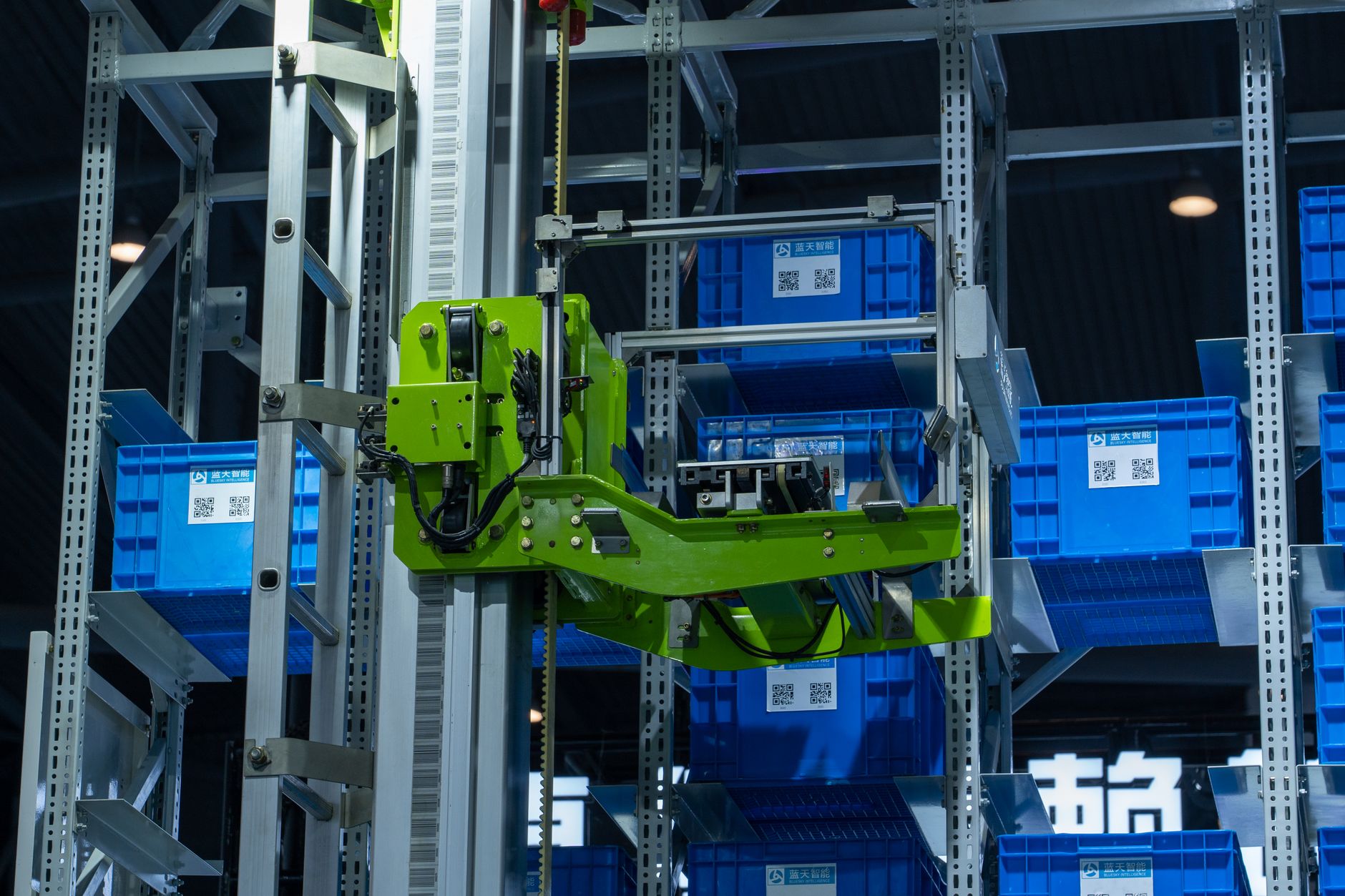
- Automated Storage and Retrieval Systems (AS/RS): Mechanized systems that automatically place and retrieve items from specific storage locations, optimizing space and speed.
- Conveyor and Sortation Systems: Networks of belts, rollers, and chutes that automatically move goods between different zones and sort them for dispatch.
- Warehouse Management Systems (WMS): Software solutions that optimize storage, inventory tracking, order picking, and other warehouse processes. Mobile WMS solutions provide flexibility and real-time data capture on the go, integrating features like bin put-away criteria and bin-to-bin inventory transfer.
2. Transportation Automation
This involves technologies that automate and optimize the movement of goods between locations:
- Fleet Management Systems (FMS): Software that optimizes vehicle routes, tracks performance, and manages maintenance schedules.
- Autonomous Vehicles: Self-driving trucks, drones for last-mile delivery, and rail systems that operate without human drivers [16].
- Telematics and GPS Tracking: Real-time monitoring of vehicle location, speed, fuel consumption, and driver behavior to improve efficiency and security.
- Automated Dock Scheduling: Systems that optimize truck arrivals and departures at loading docks to reduce wait times and congestion.
3. Order Fulfillment Automation
Solutions that streamline the entire pick, pack, and ship process from order placement to delivery:
- Order Management Systems (OMS): Centralized platforms like SkuSavvy's Order Management System that manage the entire order lifecycle, from capturing orders to ensuring timely delivery. These systems can automate order processing, routing, and tracking, and support practices like editing orders and order cancellation.
- Pick, Pack, Ship Software: Integrated solutions designed to optimize these critical stages of fulfillment, often incorporating features like multi-box shipping and intelligent packing algorithms.
- Automated Packaging Systems: Machines that automatically erect cartons, fill them with products, insert dunnage, and seal them, often followed by automated labeling.
- Shipping and Fulfillment Software: Platforms that manage carrier selection, print labels, and track shipments, as offered by SkuSavvy's Shipping & Fulfillment Software.
Industry Applications
Automation is utilized widely across diverse industries, transforming their logistical operations:
- E-commerce: Automating order processing, inventory management, picking, and packing to handle high volumes and rapid fulfillment demands, often leveraging Shopify WMS integrations for seamless operations.
- Manufacturing: Streamlining supply chain logistics, optimizing workflows on the production floor, and automating the movement of raw materials and finished goods, e.g., through automated guided vehicles in assembly lines.
- Retail: Implementing self-checkouts, AI-driven inventory controls, automated replenishment, and micro-fulfillment centers to improve in-store availability and speed up online order pickups.
- Healthcare: Automating the dispensing of pharmaceuticals, tracking medical supplies, and managing inventory in hospitals and pharmacies to enhance accuracy and reduce errors.
- Automotive: Automating parts delivery to assembly lines (e.g., using AGVs), managing complex global supply chains, and optimizing inbound logistics.
Benefits and Advantages
The adoption of automation in logistics offers a multitude of strategic and operational advantages:
- Increased Efficiency and Throughput: Automated systems operate 24/7, reducing processing times, increasing order fulfillment rates, and leading to higher overall throughput. For example, automated purchase quantity ensures timely procurement.
- Cost Reduction: Automation lowers labor costs by reducing reliance on manual tasks. It also optimizes space utilization, minimizes errors (leading to less rework and returns), and improves energy efficiency, contributing to significant operational cost savings.
- Enhanced Accuracy: Machines are less prone to human error, resulting in higher inventory accuracy, fewer mis-picks, and correct order shipments, which directly impacts customer satisfaction.
- Improved Scalability: Automated systems can be scaled up or down more easily than manual operations to adapt to fluctuating demand, such as during peak seasons like holidays, or by implementing flexible workflows.
- Better Worker Safety: Automating repetitive, heavy, or dangerous tasks reduces workplace injuries and allows human employees to focus on more complex, value-added activities.
- Real-time Visibility and Data Analytics: Automated systems generate vast amounts of data, providing real-time insights into operations. This data can be analyzed to identify bottlenecks, forecast demand more accurately, and continuously optimize processes.
Challenges and Limitations
Despite its benefits, automation presents several challenges that organizations must carefully consider:
- High Initial Investment: The upfront costs of automated systems, including hardware, software, and infrastructure modifications, can be substantial, requiring significant capital expenditure and a clear ROI calculation.
- Job Displacement and Workforce Concerns: Automation can lead to the displacement of certain manual labor roles, raising concerns about employment and the need for workforce retraining and upskilling for new, technology-focused positions.
- Technology Integration Complexity: Integrating new automated systems with existing legacy IT infrastructure (e.g., ERP, WMS) can be complex, time-consuming, and require significant technical expertise.
- Maintenance and Downtime Risks: Automated systems require specialized maintenance and can be subject to mechanical failures or software glitches, leading to costly downtime if not managed effectively.
- Cybersecurity Risks: Increased connectivity and reliance on networked systems introduce new cybersecurity vulnerabilities, requiring robust protection measures to safeguard data and operations.
- Lack of Flexibility (for some systems): Highly rigid automated systems (e.g., fixed conveyor belts or older AGVs) can be less adaptable to sudden changes in product mix, demand patterns, or warehouse layout compared to manual operations or more flexible technologies like AMRs.
Future Trends
As technology continues to advance rapidly, the future of logistics automation promises even greater sophistication and integration:
- Hyperautomation: The combination of multiple advanced technologies, including AI, Machine Learning, Robotic Process Automation (RPA), and intelligent business process management, to automate as many processes as possible. This aims to create self-managing supply chains.
- Increased Use of Autonomous Mobile Robots (AMRs): Beyond traditional AGVs, AMRs offer greater flexibility, intelligence, and navigation capabilities, making them suitable for dynamic warehouse environments and adaptable to changing layouts.
- AI and Predictive Analytics: Further growth in artificial intelligence and machine learning to facilitate highly accurate predictive analytics for demand, inventory, and potential supply chain disruptions, moving from reactive to proactive logistics management.
- Drone and Autonomous Vehicle Delivery: Continued development and wider adoption of autonomous vehicles (trucks, vans) and drones for last-mile delivery, particularly in challenging or remote areas, and for intra-campus transport.
- Digital Twins: The creation of virtual replicas of physical supply chains, warehouses, and assets, allowing for real-time monitoring, simulation of scenarios, and optimization without impacting physical operations [17].
- Blockchain Technology for Transparency: Enhanced adoption of blockchain technology for transparent, immutable, and secure tracking of goods, transactions, and information across complex supply chains, improving traceability and trust [18].
- Sustainable Automation: Designing and implementing automation solutions with an emphasis on energy efficiency, waste reduction, and optimizing logistics routes to minimize carbon footprint.
Conclusion
Automation is revolutionizing the logistics landscape, moving beyond mere mechanization to intelligent, interconnected systems that drive unprecedented improvements in efficiency, accuracy, and adaptability. From optimizing warehouse layouts and order fulfillment to transforming global supply chain visibility, its impact is profound. The future holds significant potential for further advancements, making it essential for logistics professionals to stay abreast of innovative technologies and best practices to leverage automation as a strategic imperative for resilience and growth.